




Winner Chevrolet of Wilmington

Blog / Model Research

2026 Chevrolet Equinox: Trims, Pricing, and Features Guide

Equinox

The 2026 Chevrolet Equinox is the right compact SUV for Wilmington-area families, daily commuters, and budget-conscious buyers who want a well-equipped five-passenger crossover starting at $28,800 MSRP. Six trim configurations span front-wheel drive and all-wheel drive, all powered by a turbocharged 1.5L four-cylinder producing 175 hp. Front-wheel-drive trims return 27 mpg combined; all-wheel-drive trims return 26 mpg combined. Every trim seats five and carries about 30 cu ft of cargo behind the rear seats, with a standard safety suite and an 11.3-inch touchscreen across the board.

Table of Contents

How Much Does the 2026 Chevrolet Equinox Cost to Own?

The 2026 Equinox starts at $28,800 MSRP for the front-wheel-drive LT 1.5T, making it one of the more accessible entries in the compact SUV segment. A $1,995 destination charge applies to every trim. The lineup spreads across six configurations, giving buyers a clear path from a budget-friendly daily driver up to a sport-styled or adventure-ready model.

2026 Chevrolet Equinox Pricing by Trim

Feature ACTIV 1.5T AWD ACTIV 1.5T AWD LT 1.5T AWD RS 1.5T LT 1.5T RS 1.5T
Base MSRP $33,600 $35,600 $30,800 $35,600 $28,800 $33,600

All trims share a destination charge of $1,995.

The AWD LT 1.5T at $30,800 is the most affordable path to all-wheel drive, a meaningful consideration for buyers who navigate New Castle's riverfront roads or Wilmington's urban corridors through wet winters. The front-wheel-drive LT 1.5T at $28,800 suits drivers whose daily routine stays on flat terrain and who want to keep ownership costs lean. The RS 1.5T and ACTIV 1.5T both land at $33,600 in front-wheel-drive form, while their all-wheel-drive counterparts each reach $35,600.

Fuel costs favor the front-wheel-drive trims. The LT 1.5T, RS 1.5T, and ACTIV 1.5T all return 26 city / 29 hwy / 27 combined mpg. Adding all-wheel drive drops city economy by one mpg on the AWD trims.

2026 Chevrolet Equinox Fuel Economy by Trim

Feature ACTIV 1.5T AWD ACTIV 1.5T AWD LT 1.5T AWD RS 1.5T LT 1.5T RS 1.5T
MPG 26 city / 29 hwy / 27 combined 25 city / 29 hwy / 26 combined 25 city / 29 hwy / 26 combined 25 city / 29 hwy / 26 combined 26 city / 29 hwy / 27 combined 26 city / 29 hwy / 27 combined

Buyers who are also exploring pre-owned Equinox models can compare ownership costs across model years. For most buyers in this market, the LT and AWD LT represent the strongest combination of upfront price, running costs, and standard equipment.

Styling That Complements New Castle's Colonial Streetscapes and Urban Charm

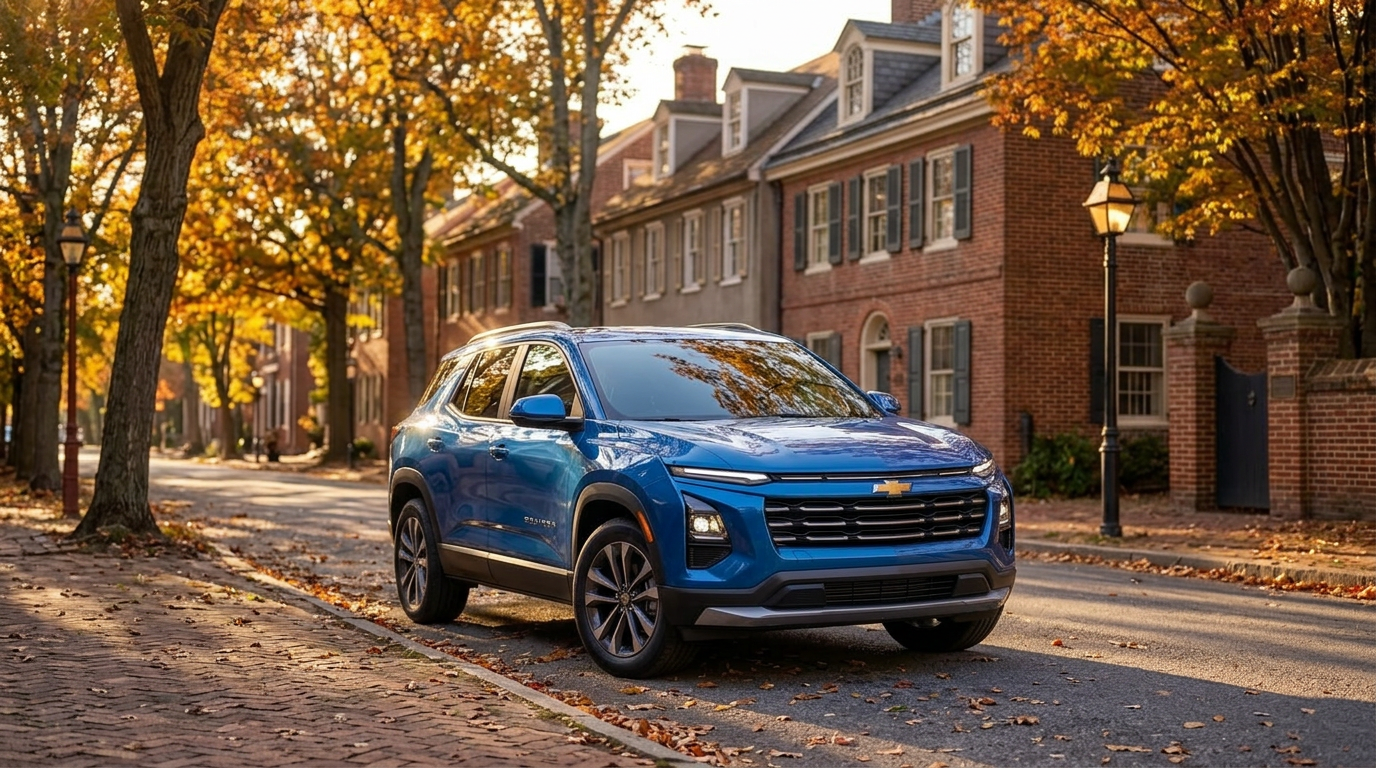
The 2026 Equinox arrives wearing a fourth-generation redesign that Car and Driver describes as "chiseled where its predecessor was soft," giving it a properly truck-like stance among compact crossover peers. That muscular profile — defined by a bold front fascia, roof spoiler, and body-colored painted bumpers on every trim — reads confidently whether parked along New Castle's brick-lined streets or navigating Wilmington's riverfront parking.

Three distinct visual personalities run through the lineup. The LT trims carry chrome bright trim around the side windows and a clean, family-friendly presence. The RS trims swap chrome for a sport-forward look, with contrasting-color door mirrors and black roof rails that suit urban settings. The ACTIV trims lean outdoorsy, featuring chrome / silver roof rails and all-terrain tires that visually signal their adventure-ready intent.

Color choices include Summit White, Mosaic Black Metallic, Lakeshore Blue Metallic, Radiant Red Tintcoat, Sterling Gray Metallic, Reef Blue Metallic, and Cacti Green. The optional Panoramic Sunroof adds a glass roof panel that opens the cabin to Delaware's riverfront sky on weekend drives. Optional two-tone roof finishes in Summit White or Mosaic Black Metallic are available on select trims, letting buyers personalize the look further.

The exterior dimensions stay consistent across all trims: 183.2 inches long, 74.9 inches wide, and 65.6 inches tall, on a 107.5-inch wheelbase. That footprint is manageable in tight urban parking and comfortable on suburban streets. If you're ready to see these colors in person, browse our current new Equinox inventory or get an estimate on your current vehicle's trade-in value to understand your total budget before you visit.

Power and Performance of the 2026 Chevrolet Equinox for Commuters and Weekend Explorers

Every 2026 Equinox uses the same turbocharged 1.5L four-cylinder engine producing 175 hp, but the drivetrain and transmission choice creates a meaningful split in the lineup. Front-wheel-drive trims — the LT 1.5T, RS 1.5T, and ACTIV 1.5T — pair that engine with a CVT transmission and produce 184 lb-ft of torque. All-wheel-drive trims — the AWD LT 1.5T, AWD RS 1.5T, and AWD ACTIV 1.5T — use the Chevrolet Hydra-Matic eight-speed automatic transmission instead, which also unlocks a higher torque output of 203 lb-ft.

2026 Chevrolet Equinox Engine and Performance by Trim

Feature ACTIV 1.5T AWD ACTIV 1.5T AWD LT 1.5T AWD RS 1.5T LT 1.5T RS 1.5T
Torque 184 lb-ft 203 lb-ft 203 lb-ft 203 lb-ft 184 lb-ft 184 lb-ft
Transmission CVT Hydra-Matic Hydra-Matic Hydra-Matic CVT CVT
Drivetrain Front-wheel drive All-wheel drive All-wheel drive All-wheel drive Front-wheel drive Front-wheel drive

All trims share: Engine: 1.5L · Horsepower: 175 hp

For the majority of Wilmington commuters navigating flat riverfront terrain and suburban roads, the front-wheel-drive CVT trims deliver smooth, predictable power delivery. The Hydra-Matic-equipped AWD trims add traction confidence for wet Delaware winters and the rolling hills heading west toward West Chester. The extra torque — 203 lb-ft vs. 184 lb-ft — is a practical benefit when merging onto I-95 with a full load of passengers.

The suspension runs MacPherson struts up front with an independent multi-link rear setup, tuned for composed highway cruising rather than sporty dynamics. Braking uses four ventilated disc brakes with ABS and a brake assist system as standard equipment. Standard hill hold and electronic stability control round out the chassis safety net. All trims include a towing capacity of 1,500 lbs — enough to haul a small boat or a loaded utility trailer for a weekend on the Delaware River.

When you're ready to move forward on a purchase, prequalifying online takes just a few minutes and helps you understand your budget before stepping into the showroom.

Comfortable Cabin Space Families and Students in the 2026 Chevrolet Equinox

Five passengers fit comfortably across two rows, with front headroom measuring 40 inches and rear headroom at 39.2 inches — enough clearance for adults in both rows. Front legroom reaches 40.9 inches and rear legroom 39.9 inches, numbers that translate to genuine comfort on longer drives rather than just tolerable short trips. Front shoulder room measures 57.7 inches and rear shoulder room 55.8 inches, so three adults across the rear bench have workable space.

2026 Chevrolet Equinox Dimensions and Capacity by Trim

Feature ACTIV 1.5T AWD ACTIV 1.5T AWD LT 1.5T AWD RS 1.5T LT 1.5T RS 1.5T
Curb weight 3,452 lbs 3,607 lbs 3,583 lbs 3,629 lbs 3,428 lbs 3,474 lbs
Payload 1,178 lbs 1,243 lbs 1,267 lbs 1,221 lbs 1,202 lbs 1,156 lbs

All trims share: Seating: 5 · Cargo: about 30 cu ft · Towing: 1,500 lbs

Behind the rear seats, every trim delivers about 30 cu ft of cargo space. Fold the rear seatback flat and that number grows to about 63.5 cu ft — room enough for a full set of weekend gear, a farmers market haul, or college move-in supplies. Edmunds noted in testing that the Equinox "proved to have a fuss-free cargo area with no weird angles or shapes, allowing for easy loading of larger objects," which is a practical advantage when you're loading and unloading in a busy parking lot.

The rear seat folds in an asymmetrical split configuration, so you can carry a mix of passengers and cargo simultaneously. Standard features across the lineup include front and rear cup holders, a full-length floor console, and illuminated visor mirrors. The ACTIV, AWD ACTIV, RS, and AWD RS trims add a dual-zone automatic climate control system as standard; the base LT and AWD LT trims include single-zone automatic climate control, with dual-zone available through the Convenience Package II upgrade.

Smart Tech to Keep Professionals Connected in the 2026 Chevrolet Equinox

The 2026 Equinox's technology foundation is consistent and genuinely useful across all six trims. Every configuration comes standard with an 11.3-inch center touchscreen and an 11-inch digital instrument cluster — both of which are meaningful screen sizes for a compact SUV at this price point. The infotainment system includes wireless Apple CarPlay and wireless Android Auto as standard equipment, so Wilmington professionals can connect their phones without fumbling for a cable. Google built-in apps and voice assistant support round out the smartphone integration layer.

Connectivity goes further with a built-in Wi-Fi hotspot via embedded SIM card, providing 3 GB of data per month for the first month. The optional 3 Years OnStar One package extends that to unlimited data for 36 months — a useful upgrade for families who want connected passengers on longer drives. OnStar telematics coverage runs for 96 months as a standard inclusion, covering services like advanced automatic collision notification, emergency call capability, remote lock/unlock, remote start, and vehicle diagnostics.

The audio system includes 6 speakers, AM/FM/satellite radio capability with a 3-month SiriusXM trial, steering wheel-mounted audio controls, and an AUX jack alongside USB connections up front. The RS 1.5T and AWD RS 1.5T trims step up to 4 USB charging ports at the front, compared to 2 on other trims — a small but practical difference for tech-heavy households. All trims also include 2 USB charging ports at the rear.

Standard Adaptive Cruise Control makes highway driving more relaxed, whether you're commuting on I-95 or heading toward West Chester on a weekend. Over-the-air software update capability means the system can receive improvements without a dealership visit.

Safety Systems Built for Busy Parents and Urban Drivers in the 2026 Chevrolet Equinox

Six airbags — front driver and passenger, front side, and front-and-rear side curtain — are standard across every 2026 Equinox trim. That structural foundation is paired with a comprehensive suite of active driver assistance systems that Chevrolet brands collectively as standard equipment.

Automatic Emergency Braking activates at speeds as low as 5 mph, covering low-speed urban scenarios where distracted driving risks are highest. Lane Keep Assist with Lane Departure Warning monitors lane position and applies gentle steering correction when the vehicle drifts without a signal — useful on longer highway stretches. Blind Zone Steering Assist goes beyond a simple warning light by providing steering feedback when the system detects a vehicle in the adjacent lane during a lane change attempt, which is a more active intervention than basic blind-spot monitoring.

Rear Cross Traffic Alert (RCTA) uses radar to detect approaching cross traffic when reversing — practical for backing out of busy parking lots near Wilmington's Christiana Riverfront or crowded school drop-off zones. Standard Front and Rear Park Assist provides camera-based guidance with sensor feedback on the ACTIV, AWD ACTIV, RS, and AWD RS trims; the LT and AWD LT include a rear vision camera as standard with the full Front and Rear Park Assist system available through the Safety and Technology Package.

The IIHS has rated the Equinox "Good" for side impact, small overlap front driver, and headlights — three of the most meaningful categories for real-world collision protection. NHTSA's side impact rating reaches 5 stars, and the rollover rating is 4 stars. For families with teen drivers, the standard Teen Driver system allows parents to set speed alerts and review a report card of driving behavior after each trip.

Pricing Breakdown of All 2026 Chevrolet Equinox Trims

The six-trim 2026 Equinox lineup divides cleanly into three personality tiers, each available in front-wheel drive and all-wheel drive.

The LT 1.5T at $28,800 is the volume-seller entry point. It comes standard with a rear vision camera, Adaptive Cruise Control, Blind Zone Steering Assist, Rear Cross Traffic Alert, 6 speakers, wireless Apple CarPlay and Android Auto, OnStar, and cloth seating. The AWD LT 1.5T at $30,800 adds all-wheel drive with the Hydra-Matic transmission and 203 lb-ft of torque. The Convenience Package II is available on both LT trims and adds meaningful upgrades: a power-adjustable driver's seat, dual-zone automatic climate control, wireless charging, heated windshield, and power liftgate with hands-free release.

The RS 1.5T at $33,600 and AWD RS 1.5T at $35,600 build on the LT with a sport-styled exterior — contrasting mirror caps, black roof rails, 19-inch alloy wheels, synthetic leather seating, dual-zone automatic climate control, Front and Rear Park Assist, power liftgate, and 4 front USB ports as standard. The optional Convenience Package III adds memory seat positions, heated front seats, and ventilated front seats.

The ACTIV 1.5T at $33,600 and AWD ACTIV 1.5T at $35,600 target outdoor-oriented buyers with all-terrain tires, chrome/silver roof rails, synthetic leather and synthetic suede seating, dual-zone automatic climate control, Front and Rear Park Assist, power liftgate, and wireless charging as standard. The same Convenience Package III available on the RS trims is offered here as well.

The optional Safety and Technology Package — available across ACTIV, AWD ACTIV, RS, and AWD RS trims — adds a 360-degree surround view camera, front and side cameras, traffic sign recognition, and front fog lights. The Panoramic Sunroof is available as a standalone option on multiple trims.

Warranty, Maintenance, and Service Insights for 2026 Chevrolet Equinox Owners

Every 2026 Equinox carries a straightforward warranty package that covers the vehicle well into the years when most buyers are still paying it off. The bumper-to-bumper limited warranty runs 3 years / 36,000 miles, the powertrain warranty extends to 5 years / 60,000 miles, and corrosion protection covers 6 years / 100,000 miles. Roadside assistance matches the powertrain term at 5 years / 60,000 miles, so you're covered if something goes wrong far from home.

A complimentary scheduled maintenance period covers the first 2 years / 24,000 miles — meaning your first two oil changes and tire rotations are included with the purchase. that's a tangible ownership benefit that can help reduce out-of-pocket maintenance costs early in ownership.

For ongoing service, Winner Chevrolet's team at 2101 Pennsylvania Ave in Wilmington uses genuine Chevrolet parts and has the diagnostic tools specific to your vehicle. The Equinox's over-the-air update capability means some software improvements arrive without a service visit at all, but when scheduled maintenance is due, booking your service appointment online keeps the process quick and on your schedule. Customers like James Dougherty have noted that the Winner Chevrolet team makes the process "smooth and easy" — the same standard applies to service as it does to sales.

Awards and Expert Recognition Highlighting the 2026 Chevrolet Equinox's Strengths

The 2026 Equinox carries meaningful third-party recognition that supports its value proposition. J.D. Power awarded the Equinox the Most Dependable Compact SUV — U.S. Vehicle Dependability Study (2026), a distinction that speaks directly to the long-term ownership concerns of buyers who plan to keep their vehicle for five or more years. That award reflects real-world reliability data collected from owners, not just initial quality impressions.

U.S. News & World Report named the Equinox EV the Best Compact EV SUV for the Money (2026) — a recognition that reflects the strength of the Equinox platform across both powertrain variants. The publication described the gas-powered Equinox as having "style to spare," noting its chiseled, truck-like redesign sets it apart from softer-looking competitors.

AutoTrader praised the fourth-generation design for its "bold design that plays up some truck-inspired DNA," while also highlighting that the interior strikes "a nice balance of physical and digital controls" — a point that matters for buyers who find fully touch-based interfaces frustrating in daily use. The Equinox competes directly against the 2026 Toyota RAV4, Honda CR-V, Nissan Rogue, and Ford Escape, and it offers standard safety tech, a large touchscreen, and competitive pricing in that segment.

Frequently Asked Questions About the 2026 Chevrolet Equinox

Q: Which 2026 Equinox trim is the best value for a daily commuter in Wilmington?

The LT 1.5T at $28,800 offers the best combination of price and standard equipment for most daily commuters. It includes wireless Apple CarPlay and Android Auto, Adaptive Cruise Control, Blind Zone Steering Assist, Rear Cross Traffic Alert, and a rear vision camera as standard — all the features that matter most on a daily highway or urban drive. If your commute involves wet roads through Delaware winters, the AWD LT 1.5T at $30,800 adds all-wheel drive and the Hydra-Matic transmission for a modest premium.

Q: Can the 2026 Equinox tow a small boat for a Delaware River outing?

Yes. All six trims are rated to tow 1,500 lbs, which covers small fishing boats, personal watercraft on a trailer, or a loaded utility trailer. A dealer-installed Trailering Package is available across all trims and adds the appropriate trailer towing preparation hardware. That rating won't move a large pontoon boat, but it handles the kind of recreational towing that New Castle and Wilmington waterfront residents typically need.

Q: Does the 2026 Equinox have enough cargo space for a family road trip?

With about 30 cu ft behind the rear seats and about 63.5 cu ft with the rear seatback folded, the Equinox handles a family's luggage comfortably. The asymmetrical folding rear seat lets you split the space between passengers and gear, and Edmunds confirmed in real-world testing that the cargo floor is flat and easy to load with larger items.

Q: What is the difference between the RS and ACTIV trims?

Both start at $33,600 in front-wheel-drive form, but they target different lifestyles. The RS has a sport-focused exterior with contrasting mirror caps and black roof rails, while the ACTIV features chrome/silver roof rails and all-terrain tires suited for light off-pavement use. Interior upholstery also differs: the RS uses synthetic leather, while the ACTIV pairs synthetic leather with synthetic suede accents.

Q: Where can I see a 2026 Equinox in person near Wilmington?

Winner Chevrolet is located at 2101 Pennsylvania Ave, Wilmington, DE 19806. You can also reach the team directly at (302) 267-4800 to confirm availability of a specific trim or color before making the drive. Customers like Marisol Paez have driven home in their new Equinox the same day they visited, so it's worth calling ahead to confirm what's in stock.
© 2026 Winner Chevrolet. All rights reserved.

Vehicle specification data © JATO Dynamics Limited.

Posted in:

Related Posts

2500HD Towing

How Much Can the Chevy Silverado 2500HD Tow?

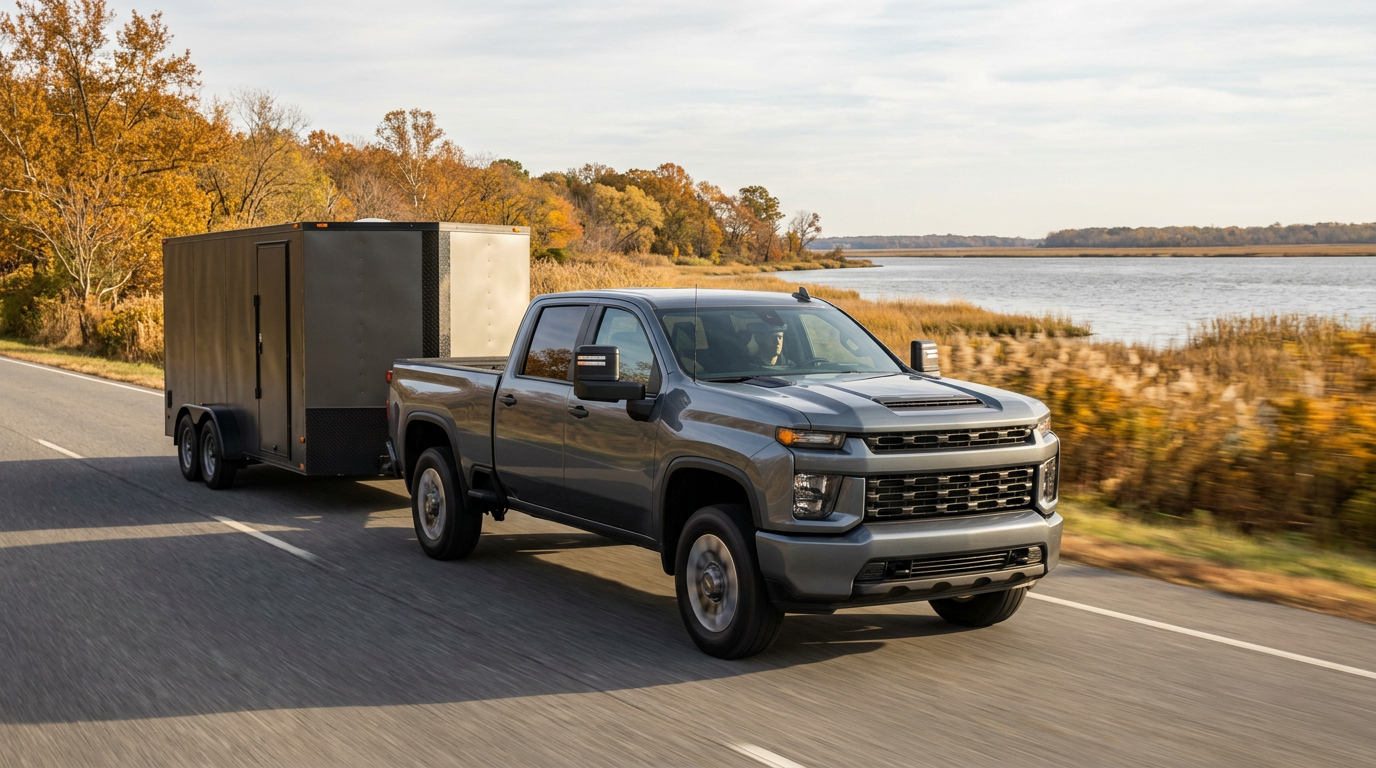
The maximum towing capacity of the Chevrolet Silverado 2500HD reaches up to 22,500 pounds when properly configured with the available 6.6L Duramax turbo-diesel V8 engine and a gooseneck or fifth-wheel hitch. With a standard conventional hitch, the diesel model manages up to 20,000 pounds of towing capacity. Configurations powered by the standard 6.6L gas V8 deliver a maximum conventional towing rating of 16,000 pounds and up to 18,700 pounds for fifth-wheel and gooseneck trailering. Understanding how a specific truck achieves these maximum ratings requires looking closely at how cab styles, bed lengths, drivetrain configurations, and trailering packages interact. While peak numbers highlight top-tier capabilities, everyday towing ratings vary across the lineup based on the exact equipment selected. Engine Selection: Choosing the 6.6L Duramax turbo-diesel V8 unlocks maximum trailering thresholds due to its massive 975 lb-ft of torque output. Cab and Bed Layout: Regular Cab models with a long bed provide the lightest curb weight, enabling peak gooseneck limits, while Crew Cab configurations carry top conventional towing ratings. Drivetrain Options: Two-wheel drive models generally offer slightly higher towing thresholds than four-wheel drive setups because 4WD components add vehicle curb weight. Wheel Size and Axle Ratios: Factory wheel sizes impact ratings, where 18-inch, 20-inch, and 22-inch wheels support higher conventional limits than entry-level 17-inch wheels. For instance, towing a heavy commercial work trailer or hauling a large boat for weekend recreation near the Delaware River in New Castle requires aligning your trailer's Gross Vehicle Weight Rating (GVWR) with your truck's specific door-jamb specification sticker. If you want to review trailering charts for specific configurations, please visit our Wilmington showroom location or call (302) 267-4800 to speak directly with our truck specialists. Table of Contents What Engine Options Power the Silverado 2500HD and How Do They Impact Towing? What Are the Payload Capacity, Hitch Ratings, and GCWR for the 2500HD? Is a Gooseneck or 5th-Wheel Prep Package Required for Maximum Towing? How Does the Chevy Silverado 2500HD Towing Capacity Compare to the Ford F-250? What Towing Technology and Safety Features Are Available on the 2500HD? Common Questions About Chevy Silverado 2500HD Towing and Payload Capabilities Finding the Right Silverado 2500HD Trailering Setup at Winner Chevrolet What Engine Options Power the Silverado 2500HD and How Do They Impact Towing? The Chevrolet Silverado 2500HD offers two heavy-duty engines: a standard 6.6L gas V8 producing 401 horsepower and 464 lb-ft of torque, and an available 6.6L Duramax turbo-diesel V8 delivering 470 horsepower and 975 lb-ft of torque. Both powertrains are paired with an Allison 10-speed automatic transmission, optimizing gear ratios to keep the engine in its ideal power band whether pulling heavy loads or driving empty. The standard 6.6L gas V8 provides strong, responsive performance for a wide range of trailering applications. Because gas engines weigh less than diesel engines, gas-powered trucks dedicate more of their gross vehicle weight limit to cargo capacity in the bed. A gas-powered 2500HD handles conventional towing up to 16,000 pounds and gooseneck trailering up to 18,700 pounds, making it an ideal choice for contractors hauling job site equipment, utility trailers, or mid-sized campers. For drivers who routinely pull maximum weight or travel through hilly terrain, the 6.6L Duramax turbo-diesel V8 provides unmatched pulling power. Generating 975 lb-ft of torque at low engine speeds, the diesel engine accelerates smoothly with heavy loads and maintains highway speeds on steep upgrades with minimal downshifting. Diesel configurations handle conventional towing up to 20,000 pounds and gooseneck trailering up to 22,500 pounds when properly equipped. Gas Engine Benefits: Lower vehicle curb weight, higher payload capacity, and lower initial equipment costs for mid-range trailering requirements. Diesel Engine Benefits: Maximum low-end torque for heavy machinery, effortless hill climbing, and peak gooseneck towing ratings. Transmission Integration: The Allison 10-speed automatic transmission includes a integrated Tow/Haul mode that adjusts shift points, engine braking, and throttle response. Buyers exploring our new Chevrolet Silverado HD inventory can compare both powertrains side-by-side to find the right torque and towing combination for their workload. What Are the Payload Capacity, Hitch Ratings, and GCWR for the 2500HD? The Chevrolet Silverado 2500HD achieves a maximum payload capacity of up to 3,850 pounds, comes equipped with a heavy-duty Class V hitch receiver rated for up to 20,000 pounds of conventional towing, and reaches a Gross Combined Weight Rating ( GCWR) of up to 30,000 pounds. These three ratings define the overall physical and mechanical boundaries for safe hauling and towing. Payload measures the maximum weight a truck can carry internally, which includes passengers in the cab, tools or cargo in the truck bed, and the tongue weight (or pin weight) exerted by a connected trailer. Gas-powered configurations achieve the highest payload figures, topping out at 3,850 pounds on Regular Cab models, while diesel models top out around 3,615 pounds due to the added weight of the diesel engine block. Powertrain Option Max Conventional Max Gooseneck Max Payload 6.6L V8 Gas Engine 16,000 lbs 18,700 lbs 3,850 lbs 6.6L Duramax Turbo-Diesel V8 20,000 lbs 22,500 lbs 3,615 lbs The Gross Combined Weight Rating ( GCWR) represents the maximum allowable total weight of the truck, its cargo, passengers, and the fully loaded trailer combined. Reaching the maximum 30,000-pound GCWR requires the diesel engine paired with the factory Max Trailering Package. Exceeding any individual limit—whether payload, axle ratings, hitch receiver limits, or GCWR—can compromise braking performance and vehicle handling. Drivers evaluating options in our pre-owned heavy-duty truck selection can check the door-jamb safety label on any specific truck to verify its exact factory payload and weight limits. Is a Gooseneck or 5th-Wheel Prep Package Required for Maximum Towing? The factory Gooseneck/5th Wheel Prep Package is essential to unlock the Chevy Silverado 2500HD's full towing potential of 22,500 pounds. Standard conventional bumper-pull hitches max out at 20,000 pounds on diesel Crew Cab models, meaning a gooseneck or fifth-wheel hitch design is mandatory to utilize the truck's full trailering potential. The factory prep package integrates structural steel crossmembers directly into the frame assembly beneath the bed floor. It features a center ball platform for a gooseneck ball, four mounting holes for fifth-wheel hitch legs, and a bed-mounted 7-pin electrical harness connector. Factory installation ensures precise alignment, preserves structural bed integrity, and carries full factory warranty coverage. Structural Frame Integration: Reinforces rear frame rails to handle high vertical pin weights directly over the rear axle. Bed Utility: Flush-mounted bed caps keep the cargo floor flat and usable when the hitch ball is removed. Electrical Convenience: Integrated 7-pin trailer harness inside the truck bed eliminates dangling wires over the tailgate. When walking trade professionals and equipment operators through vehicle configurations, our advisors notice that buyers comparing bed lengths routinely check whether the factory prep package is pre-installed before choosing between a standard bed and long bed. If you need accessories installed or want to inspect hitch hardware, you can schedule a service appointment with our certified technicians. How Does the Chevy Silverado 2500HD Towing Capacity Compare to the Ford F-250? Comparing heavy-duty pickups, the Ford F-250 Super Duty edges out the Silverado 2500HD slightly with a 23,000-pound gooseneck towing capacity when equipped with its High-Output Power Stroke diesel. Both heavy-duty trucks provide tremendous capability, but their powertrains and standard equipment differ in key operational areas. On gasoline models, the Silverado 2500HD standard 6.6L gas V8 generates 401 horsepower and 464 lb-ft of torque, offering a maximum conventional towing capacity of 16,000 pounds and up to 18,700 pounds with a gooseneck hitch. Ford’s standard 6.8L gas V8 and available 7.3L gas V8 deliver up to 17,300 pounds of maximum towing capacity. However, Chevrolet equips every 2500HD gas and diesel model with the commercial-grade Allison 10-speed automatic transmission as standard equipment, providing smooth gear transitions and robust towing durability. Feature / Spec Metric Chevy Silverado 2500HD Ford F-250 Super Duty Max Diesel Gooseneck Towing 22,500 lbs 23,000 lbs Max Diesel Conventional Towing 20,000 lbs 22,000 lbs Max Gas Towing Capacity 18,700 lbs 17,300 lbs Standard Diesel Torque Output 975 lb-ft 1,050 lb-ft Standard Heavy-Duty Transmission Allison 10-Speed Auto TorqShift 10-Speed Auto When navigating the rolling hills and suburban routes around West Chester with a heavy horse trailer or equipment rig, transmission control and hill descent braking become critical factors. Chevrolet’s integrated trailering technologies, including camera angles that monitor blind spots and hitch alignment, provide exceptional driver confidence under heavy loads. If you are considering upgrading your current truck to a heavy-duty platform, you can easily value your trade online to see how your current vehicle applies toward a new Silverado. What Towing Technology and Safety Features Are Available on the 2500HD? The Chevrolet Silverado 2500HD offers an advanced trailering tech suite featuring up to 14 available camera views, including transparent trailer view, hitch view, and bed view. These visual camera overlays help drivers maneuver tight parking areas, align hitch balls seamlessly, and monitor cargo while driving. An available Transparent Trailer View utilizes a rear-mounted auxiliary camera on the back of the trailer to allow drivers to virtually "see through" the trailer on the interior infotainment display. This feature expands rearward vision when merging or changing lanes on busy highways. Trailer Side Blind Zone Alert: Extends side blind-spot monitoring along the entire length of the attached trailer. Adaptive Cruise Control with Trailering: Adjusts braking distances and acceleration parameters to account for the extra drag and momentum of a heavy trailer. In-Vehicle Trailering App: Stores customized trailer profiles, tracks tire pressures and temperatures, and provides pre-departure safety checklists. Integrated Trailer Brake Controller: Provides smooth, proportional electric trailer brake activation directly from driver controls on the center console. Combined with heavy-duty chassis controls like StabiliTrak with Trailer Sway Control and Hill Start Assist, these technologies take the stress out of hauling heavy equipment. Drivers looking to finance a technology-equipped heavy-duty truck can apply for pre-qualification online to explore flexible credit options. Common Questions About Chevy Silverado 2500HD Towing and Payload Capabilities Q: What is the maximum towing capacity of the Chevy 2500HD with the standard gas engine? Many Silverado 2500HD buyers choose the 6.6L gas V8 engine, which supports up to 16,000 pounds of conventional towing. When configured with a gooseneck or fifth-wheel hitch on a Regular Cab long bed layout, the gas engine's maximum towing capacity reaches up to 18,700 pounds. Q: How does cab configuration affect the Silverado 2500HD payload capacity? Cab configuration directly impacts payload because larger cabs add structural weight to the truck's chassis, reducing available payload allowance. Regular Cab models offer the highest payload capacity at up to 3,850 pounds, whereas four-door Crew Cab configurations typically range between 3,300 pounds and 3,690 pounds depending on drivetrain and engine choice. Q: What is the Gross Combined Weight Rating (GCWR) for the Silverado 2500HD? The Gross Combined Weight Rating ( GCWR) for the Chevrolet Silverado 2500HD reaches up to 30,000 pounds when equipped with the 6.6L Duramax turbo-diesel V8 engine and the factory Max Trailering Package. The GCWR represents the maximum allowable weight of the truck, passengers, cargo, and attached trailer combined. Q: Can a Chevy Silverado 2500HD tow a 10,000-pound camper or toy hauler? Yes, many configurations of the Chevrolet Silverado 2500HD can handle a 10,000-pound camper or toy hauler, depending on equipment and setup. With entry-level conventional tow ratings starting well above 14,500 pounds, both gas and diesel models pull a 10,000-pound load with substantial safety margin remaining. Q: What trailer hitch receiver rating comes standard on the Chevy 2500HD? The Chevy Silverado 2500HD comes standard with a heavy-duty Class V trailer hitch receiver rated for up to 20,000 pounds of conventional towing. This high receiver rating allows owners to tow heavy equipment trailers using a standard hitch receiver without requiring immediate aftermarket receiver upgrades. If you have additional questions regarding trailering specs or want to examine hitch hardware in person, stop by to visit our dealership showroom in Wilmington or consider giving our team a quick call today. Finding the Right Silverado 2500HD Trailering Setup at Winner Chevrolet Selecting the right Chevrolet Silverado 2500HD comes down to matching your trailer weights, payload requirements, and daily driving needs with the optimal engine and rear-axle configuration. Whether you need the high-payload efficiency of the standard 6.6L gas V8 or the heavy-hauling torque of the 6.6L Duramax turbo-diesel V8, our team is ready to assist you. Visit Winner Chevrolet today to compare configurations, test-drive our heavy-duty inventory, and configure a truck built specifically for your heavy loads. © 2026 Winner Chevrolet. All rights reserved.

2027 Chevrolet Bolt Vs 2026 Nissan LEAF Vs 2027 Kia EV3

2027 Chevrolet Bolt Vs 2026 Nissan LEAF Vs 2027 Kia EV3

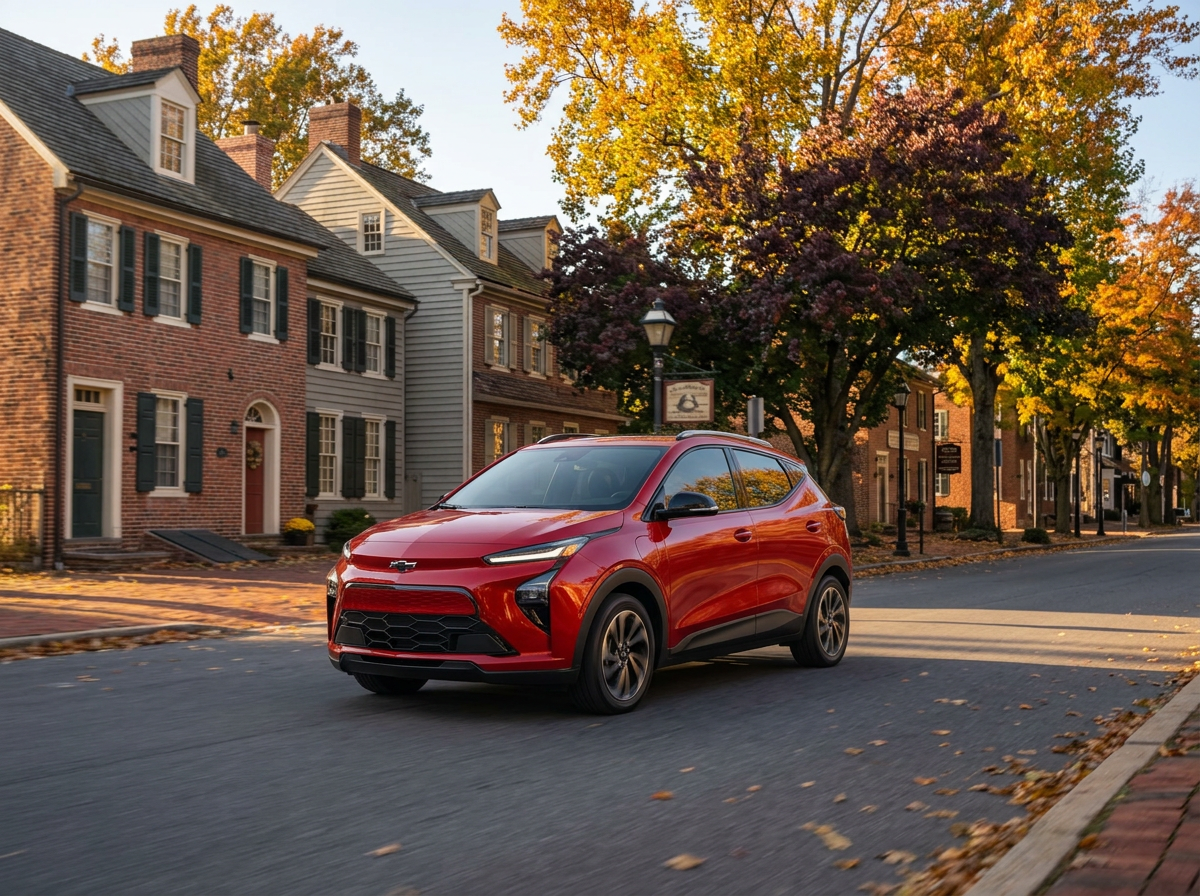
The 2027 Chevrolet Bolt wins this three-way electric crossover comparison by delivering an strong balance of competitive pricing, robust daily performance, and strong city efficiency. Starting at a base MSRP of $27,600, the Bolt offers 210 hp, an EPA-estimated range of 255 mi, and an impressive 134 city MPGe equivalent, outmatching more expensive rivals like the 2026 Nissan LEAF and 2027 Kia EV3 in pure value for daily driving. Table of Contents Which Electric Vehicle Is Best for New Castle Drivers: 2027 Chevrolet Bolt, 2026 Nissan LEAF, or 2027 Kia EV3? How the 2027 Chevrolet Bolt, 2026 Nissan LEAF, and 2027 Kia EV3 Compare on Price and Trim Value Passenger Comfort and Cargo Space: Which Model Fits Families’ Needs? Performance and Driving Experience of the 2027 Chevrolet Bolt, 2026 Nissan LEAF, and 2027 Kia EV3 on Local Roads Electric Range and Efficiency: What Commuters Can Expect from Each EV Tech Features and Safety Systems Tailored for Urban Driving Warranty Coverage and Maintenance Services for 2027 Chevrolet Bolt, 2026 Nissan LEAF, and 2027 Kia EV3 Owners Frequently Asked Questions About Choosing Between the 2027 Chevrolet Bolt, 2026 Nissan LEAF, and 2027 Kia EV3 Drive Home the featured 2027 Chevrolet Bolt from Winner Chevrolet Which Electric Vehicle Is Best for New Castle Drivers: 2027 Chevrolet Bolt, 2026 Nissan LEAF, or 2027 Kia EV3? The 2027 Chevrolet Bolt is a strong overall choice for local drivers who want maximum electric driving value without overpaying for unnecessary bulk. Navigating the flat terrain and narrow historic streets around New Castle requires a nimble crossover that easily handles tight parking spots while giving you plenty of zero-emission driving distance. With a standard 65 kWh battery pack delivering an EPA-estimated electric range of 255 mi and an extraordinary 134 city MPG rating, the Chevrolet Bolt LT Auto makes every daily trip effortless and efficient. While the 2026 Nissan LEAF and 2027 Kia EV3 attempt to compete in the subcompact electric crossover segment, both have higher starting prices than the Chevrolet Bolt. The Nissan LEAF starts its lineup with the S+ trim at $29,990 MSRP and reaches up to $38,990 MSRP for the Platinum+ trim, yet its top-tier model delivers just 110 city MPGe and a 259 mi range. Meanwhile, the Kia EV3 GT AWD commands a hefty $45,890 MSRP base price. The Chevrolet Bolt gives you modern crossover styling, intuitive interior technology, and dynamic electric acceleration at a starting price thousands of dollars below the competition. At Winner Chevrolet, we make transitioning to electric driving simple and stress-free. Whether you are exploring our current new Chevrolet vehicle lineup or evaluating high-quality pre-owned inventory options, our knowledgeable staff provides transparent information to help you choose the right vehicle for your daily commute. Engine & Performance Powertrain specs by trim Specification 2027 Chevrolet Bolt 2026 Nissan LEAF 2027 Kia EV3 Horsepower 210 hp 214 hp 288 hp Torque 169 lb-ft 250 lb-ft 345 lb-ft Transmission automatic 1-speed automatic 1-speed automatic 1-speed Drivetrain Front-wheel drive Front-wheel drive All-wheel drive How the 2027 Chevrolet Bolt, 2026 Nissan LEAF, and 2027 Kia EV3 Compare on Price and Trim Value The 2027 Chevrolet Bolt compares favorably the pricing and value category by offering two exceptionally equipped trim levels that is priced below comparable competitor trims. The Chevrolet Bolt lineup begins with the well-appointed LT Auto trim at a base MSRP of $27,600, while the sporty RS Auto trim is available at $31,600 MSRP (both subject to a standard $1,395 destination charge). In comparison, the 2026 Nissan LEAF requires a higher entry investment across its three tiers: the S+ at $29,990 MSRP, the SV+ at $34,230 MSRP, and the Platinum+ at $38,990 MSRP, each carrying a $1,575 destination charge. The value gap widens dramatically when looking at the 2027 Kia EV3. The Kia EV3 range spans from the base Land FWD trim at $38,490 MSRP, to the Land AWD trim at $41,690 MSRP, the GT-Line AWD trim at $43,490 MSRP, up to the flagship GT AWD trim at $45,890 MSRP (with a $1,495 destination charge). Paying over $45,000 for a compact crossover places a heavy burden on working families. The Chevrolet Bolt delivers standard premium equipment—including an 11.3 in central touch screen, an 11 in digital instrument cluster, and standard automatic climate control—at a price point that offers competitive value. Upgrading to the Chevrolet Bolt RS Auto adds sleek black roof rails, high-gloss interior accents, and standard heated Evotex synthetic leather seating while keeping the base MSRP below $32,000. To help make your upgrade seamless, our team can help you value your trade-in online in just a few minutes. You can also complete a secure online credit application ahead of time to explore current financing options with our team. Pricing Manufacturer-listed pricing per trim, across compared vehicles. 2027 Chevrolet Bolt Trim MSRP 2026 Nissan LEAF Trim MSRP 2027 Kia EV3 Trim MSRP LT Auto $27,600 S+ $29,990 Land FWD $38,490 RS Auto $31,600 SV+ $34,230 Land AWD $41,690 — — Platinum+ $38,990 GT-Line AWD $43,490 — — — — GT AWD $45,890 Passenger Comfort and Cargo Space: Which Model Fits Families’ Needs? The 2027 Chevrolet Bolt offers superior passenger ergonomics and intelligent cabin layout that maximize usable space for five occupants. Inside the cabin, front passengers enjoy a generous 44.3 in of front legroom and 40 in of front headroom, providing a relaxed, uncompressed driving position. Rear passengers benefit from an expansive 39.1 in of rear legroom and 37.8 in of rear headroom. With an overall interior volume of 2,735.4 l (about 97 cu ft), the Chevrolet Bolt ensures that family road trips and weekend errands remain completely comfortable. By comparison, the 2026 Nissan LEAF limits rear passenger comfort with just 31.8 in of rear legroom, offering less rear legroom than the Chevrolet Bolt. While the Nissan LEAF advertises about 20 cu ft of rear cargo volume behind the second row compared to the Chevrolet Bolt model's about 16 cu ft, the Chevrolet Bolt compensates with exceptional flexibility. Folding the 60/40 split-bench rear seat flat opens up a massive about 56 cu ft of maximum cargo capacity. That outpaces the Nissan LEAF model's total folded capacity of about 55.5 cu ft. The 2027 Kia EV3 GT AWD provides about 26 cu ft of trunk space and a total folded cargo volume of about 56.5 cu ft, but it comes at a curb weight of 4,436 lbs and a 987 lbs payload allowance—making it significantly heavier and bulkier during daily operations than the nimble 3,776 lbs Chevrolet Bolt LT Auto. The Chevrolet Bolt delivers practical, everyday versatility that suits everyday family use without forcing you into a heavy, oversized vehicle. Dimensions & Capacity Capacity and dimensions by trim Specification 2027 Chevrolet Bolt 2026 Nissan LEAF 2027 Kia EV3 Seating 5 5 5 Cargo 16.2 cu ft 20.0 cu ft 26.1 cu ft Curb weight 3,776 lbs 4,369 lbs 4,436 lbs Performance and Driving Experience of the 2027 Chevrolet Bolt, 2026 Nissan LEAF, and 2027 Kia EV3 on Local Roads The 2027 Chevrolet Bolt delivers responsive, energetic driving dynamics engineered for confidence across diverse driving environments. Power comes from an advanced electric motor outputting 210 hp and 169 lb-ft of instant torque, paired with a smooth automatic 1-speed transmission and front-wheel drive. Weighing in at a lean published curb weight of 3,776 lbs in LT trim and 3,807 lbs in RS trim, the Chevrolet Bolt offers an agile power-to-weight ratio. It accelerates from 0 to 60 mph in just 6.5 s and reaches a top electric speed of 90 mph, giving you quick off-the-line response for highway merging and quick city passes. Driving through the rolling hills of West Chester demonstrates the difference chassis tuning makes. The Chevrolet Bolt features an independent front MacPherson strut suspension with a stabilizer bar, coil springs, and an electric power steering system. This chassis configuration keeps the center of gravity low and predictable, providing composed body control and stable handling on curvy suburban roads and uneven pavement. The 2026 Nissan LEAF generates 214 hp and 250 lb-ft of torque, but its heavier curb weight of up to 4,369 lbs in Platinum+ trim dulls its agility and increases stopping inertia. The 2027 Kia EV3 GT AWD offers a higher 288 hp and 345 lb-ft of torque via its dual-motor all-wheel drive setup, but its 4,436 lbs weight is higher than the Chevrolet Bolt's. The Chevrolet Bolt strikes the ideal balance of energetic acceleration, tight turning maneuvers, and lightweight efficiency. Fuel Economy Fuel economy and range by trim Specification 2027 Chevrolet Bolt 2026 Nissan LEAF 2027 Kia EV3 MPG 134 city / 106 hwy / 120 combined 110 city / 96 hwy / 103 combined 112 city / 94 hwy / 103 combined EV range 255 mi 259 mi 280 mi Battery (kWh) 65 75 81.4 Electric Range and Efficiency: What Commuters Can Expect from Each EV The 2027 Chevrolet Bolt offers competitive urban efficiency for daily commuters. EPA estimates rate the Chevrolet Bolt at an extraordinary 134 city MPG equivalent, 106 hwy MPG equivalent, and 120 combined MPG equivalent. Equipped with a high-efficiency 65 kWh lithium iron phosphate battery pack, the Chevrolet Bolt delivers a calculated total vehicle range of 255 mi on a single charge. Combined power consumption is rated at a frugal 17.5 kWh/100km (or 0.3 mi/kWh), proving how effectively General Motors engineering extracts work from every kilowatt-hour. Comparing efficiency numbers reveals the Chevrolet Bolt model's notable advantage over its competitors: 2027 Chevrolet Bolt (LT/RS Auto): 134 city / 106 hwy / 120 combined MPG | 255 mi range | 65 kWh battery 2026 Nissan LEAF Platinum+: 110 city / 96 hwy / 103 combined MPG | 259 mi range | 75 kWh battery 2026 Nissan LEAF SV+: 122 city / 105 hwy / 114 combined MPG | 288 mi range | 75 kWh battery 2027 Kia EV3 GT AWD: 112 city / 94 hwy / 103 combined MPG | 280 mi range | 81.4 kWh battery While the Nissan LEAF S+ trim manages 303 mi of range and the Kia EV3 GT AWD offers 280 mi, both require substantially larger, heavier 75 kWh and 81.4 kWh battery packs to achieve those numbers. The Nissan LEAF Platinum+ trim consumes more energy at 20.3 kWh/100km, yielding only 103 combined MPG despite its larger pack. The Chevrolet Bolt achieves its 255 mi range with a lighter 65 kWh battery, giving you maximum real-world efficiency and faster recharge turnarounds on standard Level 2 systems. Tech Features and Safety Systems Tailored for Urban Driving The 2027 Chevrolet Bolt incorporates an array of modern infotainment technology and standard driver-assistance features engineered for stress-free urban navigation. Center stage in the cockpit is an intuitive 11.3 in diagonal color infotainment touch screen paired with a reconfigurable 11 in TFT digital instrument display screen. Standard connectivity includes wireless Apple CarPlay, wireless Android Auto, Google virtual assistant voice activation, Bluetooth, and embedded SIM card Wi-Fi capability. OnStar telematics services are included for 96 months, providing automated diagnostics, remote lock/unlock, battery status monitoring, and advanced automatic collision notification. Safety is standard on every Chevrolet Bolt. The vehicle comes equipped with 6 airbags, StabiliTrak electronic stability control, hill holder, and an advanced safety suite. Standard active safety technology includes Automatic Emergency Braking (AEB) with Pedestrian Detection, Lane Keep Assist (LKA) with lane departure warning, Blind Zone Steering Assist, and Rear Cross Traffic Braking. For highway drivers, the optional Super Cruise Package adds Level 2 hands-free autonomous driving capability with stop-and-go adaptive cruise control and automatic lane changing. While the 2026 Nissan LEAF Platinum+ offers ProPILOT assist and a 14.3 in screen, its standard telematics subscription lasts just 12 months. The Kia EV3 includes safety assist systems, but features like remote parking assistance add unnecessary complexity. The Chevrolet Bolt delivers straightforward, high-utility tech that enhances driver safety without distracting from the road. Warranty Coverage and Maintenance Services for 2027 Chevrolet Bolt, 2026 Nissan LEAF, and 2027 Kia EV3 Owners Chevrolet backs the 2027 Bolt with an extensive manufacturer warranty package designed to provide long-term peace of mind. Every new Chevrolet Bolt includes: Bumper-to-Bumper Limited Warranty: 36 months / 36,000 miles Powertrain Limited Warranty: 60 months / 60,000 miles Electric Component Warranty: 60 months / 60,000 miles EV Battery Limited Warranty: 96 months / 100,000 miles Roadside Assistance Coverage: 60 months / 60,000 miles Corrosion Protection: 72 months / 100,000 miles Included Full Maintenance Service: 24 months / 24,000 miles While Kia offers a longer powertrain term, Chevrolet includes a 24 month / 24,000 mile maintenance package with factory-certified care. Furthermore, Nissan restricts its roadside assistance coverage to just 36 months or 36,000 miles. In the event of an unexpected roadside emergency or flat tire, Chevrolet owners receive 24/7 support backed by factory-trained technicians and genuine OEM parts. You can reach dedicated support directly via Chevrolet Roadside Assistance: 1-800-243-8872. When routine service intervals arrive, you can easily schedule your service appointment with the certified technicians at Winner Chevrolet. Frequently Asked Questions About Choosing Between the 2027 Chevrolet Bolt, 2026 Nissan LEAF, and 2027 Kia EV3 Q: Why is the 2027 Chevrolet Bolt a better value than the 2026 Nissan LEAF and 2027 Kia EV3? The 2027 Chevrolet Bolt delivers superior value by offering a starting MSRP of just $27,600 for the LT Auto trim, which is $2,390 less than the base Nissan LEAF S+ ( $29,990 MSRP) and over $10,000 less than the Kia EV3 base trim. Despite its lower price, the Bolt includes standard feature highlights like an 11.3 in touch screen, 210 hp, 134 city MPGe efficiency, and a 255-mile EV range, making it the most cost-effective EV in its class. Q: How does the interior space of the Chevrolet Bolt compare to its competitors? The Chevrolet Bolt provides an impressive 39.1 in of rear legroom and 40 in of front headroom, far exceeding the Nissan LEAF model's tight 31.8 in rear legroom. When folding down the rear seats, the Bolt expands its cargo capacity to about 56 cu ft, offering practical hauling space that easily accommodates luggage, sports gear, and daily shopping needs. Q: What is the real-world battery range and city efficiency of the 2027 Chevrolet Bolt? The 2027 Chevrolet Bolt utilizes an efficient 65 kWh battery pack to achieve an EPA-estimated range of 255 mi. It excels in urban commuting with a class-leading 134 city MPG equivalent and a combined rating of 120 MPG equivalent, ensuring minimal energy consumption during stop-and-go city driving. Q: What safety systems are standard on the 2027 Chevrolet Bolt? Standard active safety technologies on the Chevrolet Bolt include Automatic Emergency Braking (AEB) with Pedestrian Detection, Lane Keep Assist (LKA), Blind Zone Steering Assist, and Rear Cross Traffic Braking. It also features 6 airbags, StabiliTrak stability control, and OnStar automatic collision notification. Q: Where can I test drive and buy the 2027 Chevrolet Bolt locally? You can test drive and purchase the 2027 Chevrolet Bolt at Winner Chevrolet, located at 2101 Pennsylvania Ave, Wilmington, DE 19806. You can easily find our Wilmington dealership location or give our sales team a quick call at (302) 267-4800 to schedule your personalized vehicle tour. Drive Home the featured 2027 Chevrolet Bolt from Winner Chevrolet The 2027 Chevrolet Bolt shows that transitioning to zero-emission driving can fit a variety of needs. By pairing an accessible $27,600 starting MSRP with a 210 hp powertrain, 255 mi of range, 134 city MPGe, and about 56 cu ft of maximum cargo room, the Chevrolet Bolt emerges as the undisputed winner over the 2026 Nissan LEAF and 2027 Kia EV3. Our team at Winner Chevrolet is committed to serving drivers across Wilmington and surrounding Delaware and Pennsylvania communities with honest advice, flexible financing, and expert service close to home. Visit our showroom at 2101 Pennsylvania Ave, Wilmington, DE 19806 or contact our team today to explore our new inventory and experience the 2027 Chevrolet Bolt firsthand! © 2026 Winner Chevrolet. All rights reserved. Vehicle specification data © JATO Dynamics Limited.

How Does Lane Keep Assist Work to Protect Drivers?

How Does Lane Keep Assist Work to Protect Drivers?

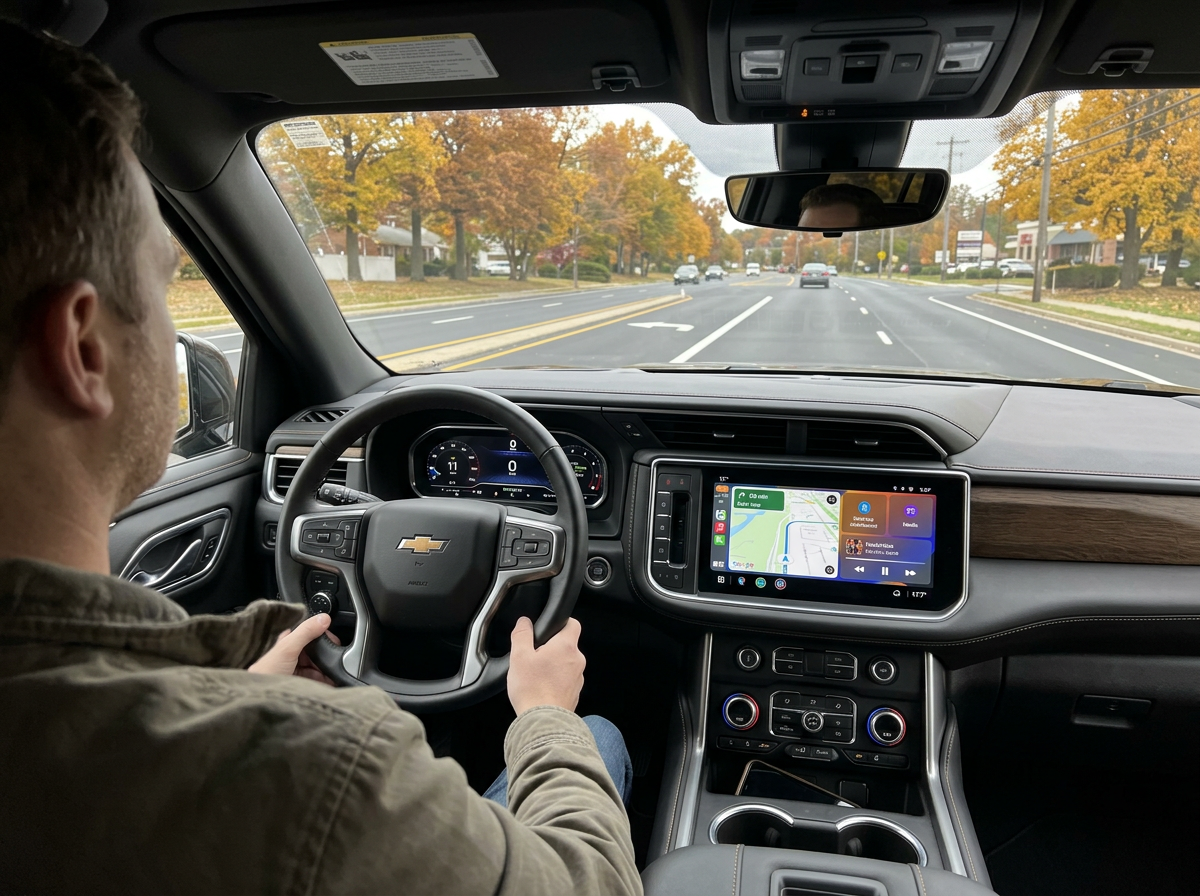
Lane Keep Assist uses a forward-facing digital camera mounted behind the rearview mirror to detect painted lane lines and provides a brief, gentle turn of the steering wheel to help guide the vehicle back into its lane when an unintentional drift is detected without a turn signal. This active safety intervention helps prevent unintentional lane departures, sideswipe collisions, and road departure incidents during daily driving. At its core, Lane Keep Assist functions as an intelligent co-pilot on multi-lane highways and arterial roads. The system constantly monitors the vehicle's position relative to high-contrast white or yellow pavement markings. When the onboard camera detects that a wheel is approaching or crossing a lane boundary and the driver has not activated a turn signal, the electronic power steering module receives a command to deliver corrective steering torque. This gentle nudge signals to the driver that the vehicle is drifting while physically aiding its return to the center of the travel lane. For drivers navigating flat riverfront roadways around New Castle, this active assistance offers an essential layer of protection against brief lapses in concentration or fatigue. The system operates unobtrusively in the background, intervening only when line crossings occur without driver signaling. Drivers always retain complete override capability; applying intentional steering force easily overcomes the corrective torque. If you have questions about how active driver assistance operates on current Chevrolet models, you can view our Wilmington dealership directions to visit our team or give us a call at (302) 267-4800 to speak with a technology specialist. Table of Contents How Does Lane Departure Warning Differ from Lane Keep Assist? Does Lane Keep Assist Steer the Car Completely by Itself? How Do Sensors, Cameras, and Weather Affect Lane Detection? Is Lane Keep Assist Worth Having for Highway Commuters? What Steps Should Drivers Take If a Warning Light Comes On? Common Questions About Chevrolet Lane Assistance Features How Does Lane Departure Warning Differ from Lane Keep Assist? Lane Departure Warning provides passive visual, audible, or haptic alerts to inform drivers when their vehicle approaches or crosses lane markings without a turn signal, whereas Lane Keep Assist adds active physical intervention by applying gentle steering torque to help guide the vehicle back into its lane. While one system simply alerts the driver, the other takes direct action to assist in maintaining proper lane positioning. Understanding the distinction between passive warnings and active interventions helps drivers choose the right safety equipment for their daily travel. Lane Departure Warning acts as a visual and sensory notification system. When the forward camera detects an unsignaled lane shift, the system alerts the driver through an amber warning icon on the instrument cluster, an audible chime, or haptic seat/steering wheel vibrations. It does not exert any mechanical force on the steering wheel or braking system, leaving the corrective steering maneuver entirely up to the driver. In contrast, Lane Keep Assist builds upon those underlying camera sensors to execute physical corrections. When an unintended departure occurs, Lane Keep Assist engages the electric power steering motor to apply a subtle, corrective turn. In many Chevrolet models, such as the 2026 Chevrolet Trax and 2026 Chevrolet Equinox, both systems work seamlessly as part of Chevy Safety Assist. The vehicle provides a gentle steering correction first; if the vehicle continues to drift past the lane line, additional audible or visual warnings follow to prompt immediate driver reaction. You can explore our inventory of new Chevrolet models equipped with these standard active safety suites. Does Lane Keep Assist Steer the Car Completely by Itself? Unlike fully autonomous systems, Lane Keep Assist provides momentary steering corrections rather than continuous control, emphasizing the driver's responsibility to maintain focus and hands on the wheel. It is classified as an assist technology rather than an autonomous driving system. A common point of confusion among car shoppers is the difference between corrective lane keeping and continuous lane centering. Lane Keep Assist operates on a reaction-based principle: it remains passive while the vehicle travels within its lane and only engages when the vehicle edges toward or crosses a boundary line. It does not hold the vehicle in the dead center of the lane continuously. Chevrolet also offers higher-level continuous steering tech like Lane Centering Assist or Super Cruise on select trims and models, but standard Lane Keep Assist requires full driver steering participation. Built-in safety protocols ensure that drivers remain attentive while Lane Keep Assist is active. Onboard capacitive or torque sensors inside the steering column monitor driver hand presence. If the system detects that hands have been removed from the wheel for more than a few seconds, it displays visual warnings and sounds audible alerts before disengaging active steering assistance. Buyers test-driving a 2026 Chevrolet Traverse frequently ask whether the steering system takes control away from the driver during sudden maneuvers. Our advisors demonstrate that any intentional driver steering input immediately overrides the system, ensuring you maintain ultimate control around road hazards or unexpected traffic shifts. Drivers seeking these safety capabilities can also browse our pre-owned vehicle selection for quality late-model vehicles featuring driver assistance packages. How Do Sensors, Cameras, and Weather Affect Lane Detection? Severe weather such as heavy rain or fog can impair the forward-facing camera's ability to detect lane markings, temporarily disabling Lane Keep Assist functionality. Clear visual contrast between painted lane markers and the asphalt surface is required for proper operation. Because optical lane tracking depends on visual clarity, environmental factors directly influence system availability: Windshield Obstructions: Snow, ice, dead insects, or dirt build-up over the camera window on the upper windshield can block the lens, triggering a temporary system unavailable message on the driver display. Low Contrast and Faded Markings: Old, worn, or faded painted lines, as well as roads covered in slush or leaves, make it difficult for image-processing algorithms to distinguish lane boundaries. Glare and Lighting Shifts: Direct low-angle sunlight hitting the camera lens during sunrise or sunset, or reflective wet pavement at night, can temporarily blind the optical sensor. Construction Zones: Multiple overlapping temporary lane lines or altered traffic patterns in work zones can confuse camera tracking, requiring the driver to rely solely on manual steering. Maintaining clear camera optics is essential for reliable active safety performance. Using fresh windshield wiper blades and keeping washer fluid filled helps ensure the camera view remains clear during foul weather. If your vehicle displays a persistent lane assist service light even after cleaning the glass, you can schedule a service appointment with our factory-trained Chevrolet technicians for camera inspection and sensor calibration. Is Lane Keep Assist Worth Having for Highway Commuters? Lane Keep Assist is exceptionally valuable for highway commuters because it significantly reduces driving fatigue during long daily trips and lowers the risk of single-vehicle road departures or sideswipe collisions caused by momentary distractions. By serving as a continuous safety backup on high-speed corridors, it provides measurable peace of mind for daily drivers. For drivers who tackle daily highway travel along rolling suburban routes around West Chester, long stretches of steady driving can lead to physical tension and driver fatigue. Lane Keep Assist acts as an extra set of eyes, constantly monitoring lane boundaries when highway driving becomes monotonous. National highway safety data indicates that lane departure crashes—including sideswiping vehicles in adjacent lanes or drifting off the shoulder—account for a high percentage of serious highway incidents. Having an active system that gently nudges the vehicle back into its lane provides a critical buffer against catastrophic drift-related accidents. Chevrolet includes Chevy Safety Assist as standard equipment across a wide variety of vehicles, including the 2026 Chevrolet Silverado 1500 and 2026 Chevrolet Silverado EV. This means highway drivers do not need to purchase expensive optional luxury upgrades to enjoy the protective benefits of Lane Keep Assist and Lane Departure Warning. If you are considering upgrading your current commuter vehicle to a model with modern safety tech, you can value your trade online to see how much equity you can apply toward a new Chevrolet. What Steps Should Drivers Take If a Warning Light Comes On? If the Lane Keep Assist warning light turns amber or displays a service icon on your instrument cluster, drivers should first safely pull off the road to inspect and clean the windshield area surrounding the camera lens, verify that the system has not been manually turned off, and ensure driving conditions permit proper camera tracking. When troubleshooting an active warning light or system indicator message, follow these recommended diagnostic steps: Check Windshield Cleanliness: Turn off the engine, exit the vehicle safely, and inspect the top-center of the windshield in front of the rearview mirror. Wipe away snow, ice, mud, or bug residue covering the camera lens window. Verify System Switch Settings: Check the physical Lane Keep Assist toggle button on the instrument panel or navigate through the infotainment vehicle settings menu to ensure the feature was not accidentally deactivated. Confirm Operating Speed: Ensure you are driving at speeds where the system is active. Most Chevrolet models require speeds above 37 mph to engage lane tracking. Inspect Road Markings: Pay attention to the road surface. If lane lines are covered by snow or dirt, the green system active icon will change to amber or turn off until clear lines reappear. Restart the Vehicle: Cycle the ignition off and on to allow the onboard computer module to perform a fresh system self-check. If the amber warning light remains lit after clearing the glass and restarting the vehicle, an underlying camera alignment issue or electronic fault may require professional attention. Drivers ready to upgrade their vehicle's safety features can submit a pre-qualification application to explore flexible auto financing options with our finance team. Common Questions About Chevrolet Lane Assistance Features Chevrolet integrates active driver assistance technology across its vehicle lineup to support driver awareness and highway safety. Below are answers to common questions about how Lane Keep Assist and Lane Departure Warning operate in daily driving scenarios. Q: Can drivers manually turn off Lane Keep Assist and Lane Departure Warning? Yes, drivers can easily deactivate Lane Keep Assist and Lane Departure Warning at any time. Chevrolet vehicles feature a dedicated physical button on the instrument panel—marked with an icon showing a vehicle between two lane lines—or a toggle switch within the central infotainment menu. Pressing the button turns the feature off, extinguishing the green indicator icon on the cluster. The system usually remembers your preference or resets upon restarting, giving you full control over when active assistance is enabled. Q: At what speeds do Chevrolet lane assistance systems activate? Chevrolet Lane Keep Assist and Lane Departure Warning systems typically activate at highway and main road speeds, with exact operating thresholds varying by model and conditions. The system remains inactive at slow city speeds, during tight parking lot maneuvers, or when reversing. This speed threshold prevents unnecessary steering nudges or alerts during urban driving where tight turns and frequent lane changes are expected. Q: Will Lane Keep Assist trigger if I use my turn signal to change lanes? No, activating your turn signal temporarily suppresses both Lane Keep Assist and Lane Departure Warning. When you signal a lane change, the control module recognizes that the lane boundary crossing is intentional. You can merge smoothly into an adjacent lane without feeling any corrective steering torque or hearing warning alerts. The system automatically resumes active monitoring once your turn signal cancels and new lane lines are detected. Q: What is the difference between Lane Keep Assist and Lane Centering Assist? Lane Keep Assist operates as a protective boundary system that intervenes only when your vehicle drifts near or over a detected lane line, applying a brief nudge to direct the vehicle back inward. Lane Centering Assist, by contrast, provides continuous, smooth steering inputs to keep the vehicle centered in the middle of the lane at all times. Both features are designed to assist the driver and require you to keep your hands on the steering wheel. Q: Does Chevy Safety Assist come standard on new Chevrolet models? Yes, Chevy Safety Assist comes standard on many new Chevrolet passenger vehicles, including the 2026 Chevrolet Trax, 2026 Chevrolet Equinox, 2026 Chevrolet Traverse, and 2026 Chevrolet Silverado 1500. This comprehensive suite bundles Lane Keep Assist with Lane Departure Warning, Forward Collision Alert, Automatic Emergency Braking, Front Pedestrian Braking, and IntelliBeam automatic high beams, providing comprehensive active safety protection as standard equipment. To explore Chevrolet active safety technologies in person, we invite you to visit our Wilmington showroom at Winner Chevrolet or call our team at (302) 267-4800 to schedule a hands-on test drive today. © 2026 Winner Chevrolet. All rights reserved. Vehicle specification data © JATO Dynamics Limited.