



Winner Chevrolet of Wilmington

Blog / Vehicle Customization & Ordering

Blog

All Vehicle Customization & Ordering Buying Guides New Vehicle Reviews Financing & Insurance Maintenance & Service Model Comparisons Technology & Innovation New Vehicle Sales Safety Features Used Vehicle Guides Leasing Guides Online Car Buying & Home Delivery Vehicle Inventory Updates Wilmington Chevrolet Dealer Dealership News & Updates Inventory & Availability Trade-In & Leasing Options Certified Pre-Owned Vehicles Comparisons Electric Vehicles Engine & Oil Care Inventory Comparisons Regional Tax & Fee Insights Service Scheduling & Convenience Trade-In & Appraisal Guides Vehicle Care Tips Wilmington Chevrolet Service Winner Chevrolet of Wilmington Service Auto Loan Tips Electric Vehicles & Incentives Financing Genuine Parts & Accessories Towing & Hauling Guides Towing & Trailering Guides Truck Technology & Features
How Does Lane Keep Assist Work to Protect Drivers?

How Does Lane Keep Assist Work to Protect Drivers?

Lane Keep Assist uses a forward-facing digital camera mounted behind the rearview mirror to detect painted lane lines and provides a brief, gentle turn of the steering wheel to help guide the vehicle back into its lane when an unintentional drift is detected without a turn signal. This active safety intervention helps prevent unintentional lane departures, sideswipe collisions, and road departure incidents during daily driving. At its core, Lane Keep Assist functions as an intelligent co-pilot on multi-lane highways and arterial roads. The system constantly monitors the vehicle's position relative to high-contrast white or yellow pavement markings. When the onboard camera detects that a wheel is approaching or crossing a lane boundary and the driver has not activated a turn signal, the electronic power steering module receives a command to deliver corrective steering torque. This gentle nudge signals to the driver that the vehicle is drifting while physically aiding its return to the center of the travel lane. For drivers navigating flat riverfront roadways around New Castle, this active assistance offers an essential layer of protection against brief lapses in concentration or fatigue. The system operates unobtrusively in the background, intervening only when line crossings occur without driver signaling. Drivers always retain complete override capability; applying intentional steering force easily overcomes the corrective torque. If you have questions about how active driver assistance operates on current Chevrolet models, you can view our Wilmington dealership directions to visit our team or give us a call at (302) 267-4800 to speak with a technology specialist. Table of Contents How Does Lane Departure Warning Differ from Lane Keep Assist? Does Lane Keep Assist Steer the Car Completely by Itself? How Do Sensors, Cameras, and Weather Affect Lane Detection? Is Lane Keep Assist Worth Having for Highway Commuters? What Steps Should Drivers Take If a Warning Light Comes On? Common Questions About Chevrolet Lane Assistance Features How Does Lane Departure Warning Differ from Lane Keep Assist? Lane Departure Warning provides passive visual, audible, or haptic alerts to inform drivers when their vehicle approaches or crosses lane markings without a turn signal, whereas Lane Keep Assist adds active physical intervention by applying gentle steering torque to help guide the vehicle back into its lane. While one system simply alerts the driver, the other takes direct action to assist in maintaining proper lane positioning. Understanding the distinction between passive warnings and active interventions helps drivers choose the right safety equipment for their daily travel. Lane Departure Warning acts as a visual and sensory notification system. When the forward camera detects an unsignaled lane shift, the system alerts the driver through an amber warning icon on the instrument cluster, an audible chime, or haptic seat/steering wheel vibrations. It does not exert any mechanical force on the steering wheel or braking system, leaving the corrective steering maneuver entirely up to the driver. In contrast, Lane Keep Assist builds upon those underlying camera sensors to execute physical corrections. When an unintended departure occurs, Lane Keep Assist engages the electric power steering motor to apply a subtle, corrective turn. In many Chevrolet models, such as the 2026 Chevrolet Trax and 2026 Chevrolet Equinox, both systems work seamlessly as part of Chevy Safety Assist. The vehicle provides a gentle steering correction first; if the vehicle continues to drift past the lane line, additional audible or visual warnings follow to prompt immediate driver reaction. You can explore our inventory of new Chevrolet models equipped with these standard active safety suites. Does Lane Keep Assist Steer the Car Completely by Itself? Unlike fully autonomous systems, Lane Keep Assist provides momentary steering corrections rather than continuous control, emphasizing the driver's responsibility to maintain focus and hands on the wheel. It is classified as an assist technology rather than an autonomous driving system. A common point of confusion among car shoppers is the difference between corrective lane keeping and continuous lane centering. Lane Keep Assist operates on a reaction-based principle: it remains passive while the vehicle travels within its lane and only engages when the vehicle edges toward or crosses a boundary line. It does not hold the vehicle in the dead center of the lane continuously. Chevrolet also offers higher-level continuous steering tech like Lane Centering Assist or Super Cruise on select trims and models, but standard Lane Keep Assist requires full driver steering participation. Built-in safety protocols ensure that drivers remain attentive while Lane Keep Assist is active. Onboard capacitive or torque sensors inside the steering column monitor driver hand presence. If the system detects that hands have been removed from the wheel for more than a few seconds, it displays visual warnings and sounds audible alerts before disengaging active steering assistance. Buyers test-driving a 2026 Chevrolet Traverse frequently ask whether the steering system takes control away from the driver during sudden maneuvers. Our advisors demonstrate that any intentional driver steering input immediately overrides the system, ensuring you maintain ultimate control around road hazards or unexpected traffic shifts. Drivers seeking these safety capabilities can also browse our pre-owned vehicle selection for quality late-model vehicles featuring driver assistance packages. How Do Sensors, Cameras, and Weather Affect Lane Detection? Severe weather such as heavy rain or fog can impair the forward-facing camera's ability to detect lane markings, temporarily disabling Lane Keep Assist functionality. Clear visual contrast between painted lane markers and the asphalt surface is required for proper operation. Because optical lane tracking depends on visual clarity, environmental factors directly influence system availability: Windshield Obstructions: Snow, ice, dead insects, or dirt build-up over the camera window on the upper windshield can block the lens, triggering a temporary system unavailable message on the driver display. Low Contrast and Faded Markings: Old, worn, or faded painted lines, as well as roads covered in slush or leaves, make it difficult for image-processing algorithms to distinguish lane boundaries. Glare and Lighting Shifts: Direct low-angle sunlight hitting the camera lens during sunrise or sunset, or reflective wet pavement at night, can temporarily blind the optical sensor. Construction Zones: Multiple overlapping temporary lane lines or altered traffic patterns in work zones can confuse camera tracking, requiring the driver to rely solely on manual steering. Maintaining clear camera optics is essential for reliable active safety performance. Using fresh windshield wiper blades and keeping washer fluid filled helps ensure the camera view remains clear during foul weather. If your vehicle displays a persistent lane assist service light even after cleaning the glass, you can schedule a service appointment with our factory-trained Chevrolet technicians for camera inspection and sensor calibration. Is Lane Keep Assist Worth Having for Highway Commuters? Lane Keep Assist is exceptionally valuable for highway commuters because it significantly reduces driving fatigue during long daily trips and lowers the risk of single-vehicle road departures or sideswipe collisions caused by momentary distractions. By serving as a continuous safety backup on high-speed corridors, it provides measurable peace of mind for daily drivers. For drivers who tackle daily highway travel along rolling suburban routes around West Chester, long stretches of steady driving can lead to physical tension and driver fatigue. Lane Keep Assist acts as an extra set of eyes, constantly monitoring lane boundaries when highway driving becomes monotonous. National highway safety data indicates that lane departure crashes—including sideswiping vehicles in adjacent lanes or drifting off the shoulder—account for a high percentage of serious highway incidents. Having an active system that gently nudges the vehicle back into its lane provides a critical buffer against catastrophic drift-related accidents. Chevrolet includes Chevy Safety Assist as standard equipment across a wide variety of vehicles, including the 2026 Chevrolet Silverado 1500 and 2026 Chevrolet Silverado EV. This means highway drivers do not need to purchase expensive optional luxury upgrades to enjoy the protective benefits of Lane Keep Assist and Lane Departure Warning. If you are considering upgrading your current commuter vehicle to a model with modern safety tech, you can value your trade online to see how much equity you can apply toward a new Chevrolet. What Steps Should Drivers Take If a Warning Light Comes On? If the Lane Keep Assist warning light turns amber or displays a service icon on your instrument cluster, drivers should first safely pull off the road to inspect and clean the windshield area surrounding the camera lens, verify that the system has not been manually turned off, and ensure driving conditions permit proper camera tracking. When troubleshooting an active warning light or system indicator message, follow these recommended diagnostic steps: Check Windshield Cleanliness: Turn off the engine, exit the vehicle safely, and inspect the top-center of the windshield in front of the rearview mirror. Wipe away snow, ice, mud, or bug residue covering the camera lens window. Verify System Switch Settings: Check the physical Lane Keep Assist toggle button on the instrument panel or navigate through the infotainment vehicle settings menu to ensure the feature was not accidentally deactivated. Confirm Operating Speed: Ensure you are driving at speeds where the system is active. Most Chevrolet models require speeds above 37 mph to engage lane tracking. Inspect Road Markings: Pay attention to the road surface. If lane lines are covered by snow or dirt, the green system active icon will change to amber or turn off until clear lines reappear. Restart the Vehicle: Cycle the ignition off and on to allow the onboard computer module to perform a fresh system self-check. If the amber warning light remains lit after clearing the glass and restarting the vehicle, an underlying camera alignment issue or electronic fault may require professional attention. Drivers ready to upgrade their vehicle's safety features can submit a pre-qualification application to explore flexible auto financing options with our finance team. Common Questions About Chevrolet Lane Assistance Features Chevrolet integrates active driver assistance technology across its vehicle lineup to support driver awareness and highway safety. Below are answers to common questions about how Lane Keep Assist and Lane Departure Warning operate in daily driving scenarios. Q: Can drivers manually turn off Lane Keep Assist and Lane Departure Warning? Yes, drivers can easily deactivate Lane Keep Assist and Lane Departure Warning at any time. Chevrolet vehicles feature a dedicated physical button on the instrument panel—marked with an icon showing a vehicle between two lane lines—or a toggle switch within the central infotainment menu. Pressing the button turns the feature off, extinguishing the green indicator icon on the cluster. The system usually remembers your preference or resets upon restarting, giving you full control over when active assistance is enabled. Q: At what speeds do Chevrolet lane assistance systems activate? Chevrolet Lane Keep Assist and Lane Departure Warning systems typically activate at highway and main road speeds, with exact operating thresholds varying by model and conditions. The system remains inactive at slow city speeds, during tight parking lot maneuvers, or when reversing. This speed threshold prevents unnecessary steering nudges or alerts during urban driving where tight turns and frequent lane changes are expected. Q: Will Lane Keep Assist trigger if I use my turn signal to change lanes? No, activating your turn signal temporarily suppresses both Lane Keep Assist and Lane Departure Warning. When you signal a lane change, the control module recognizes that the lane boundary crossing is intentional. You can merge smoothly into an adjacent lane without feeling any corrective steering torque or hearing warning alerts. The system automatically resumes active monitoring once your turn signal cancels and new lane lines are detected. Q: What is the difference between Lane Keep Assist and Lane Centering Assist? Lane Keep Assist operates as a protective boundary system that intervenes only when your vehicle drifts near or over a detected lane line, applying a brief nudge to direct the vehicle back inward. Lane Centering Assist, by contrast, provides continuous, smooth steering inputs to keep the vehicle centered in the middle of the lane at all times. Both features are designed to assist the driver and require you to keep your hands on the steering wheel. Q: Does Chevy Safety Assist come standard on new Chevrolet models? Yes, Chevy Safety Assist comes standard on many new Chevrolet passenger vehicles, including the 2026 Chevrolet Trax, 2026 Chevrolet Equinox, 2026 Chevrolet Traverse, and 2026 Chevrolet Silverado 1500. This comprehensive suite bundles Lane Keep Assist with Lane Departure Warning, Forward Collision Alert, Automatic Emergency Braking, Front Pedestrian Braking, and IntelliBeam automatic high beams, providing comprehensive active safety protection as standard equipment. To explore Chevrolet active safety technologies in person, we invite you to visit our Wilmington showroom at Winner Chevrolet or call our team at (302) 267-4800 to schedule a hands-on test drive today. © 2026 Winner Chevrolet. All rights reserved. Vehicle specification data © JATO Dynamics Limited.
Winner_Chevrolet_Suburban_Sept_2026

What Makes the 2026 Chevrolet Suburban Stand Out?

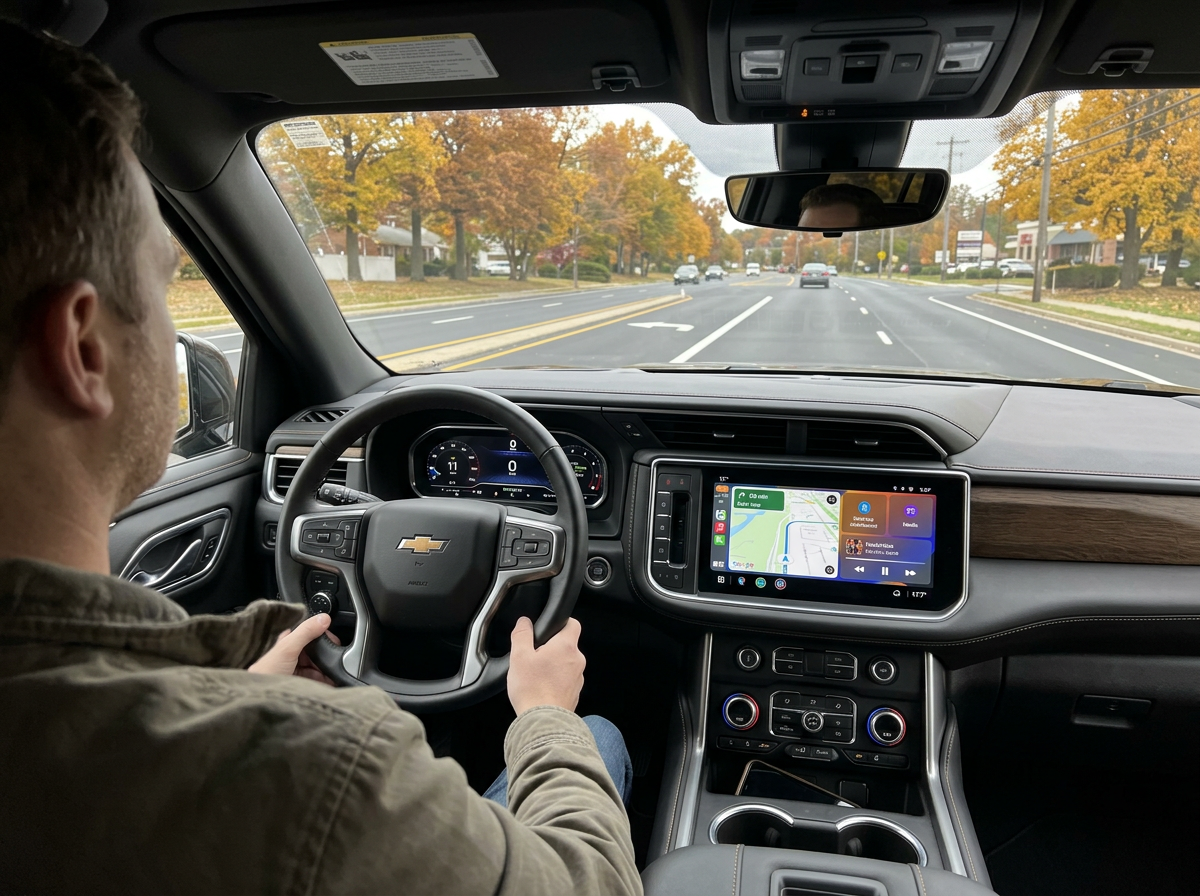
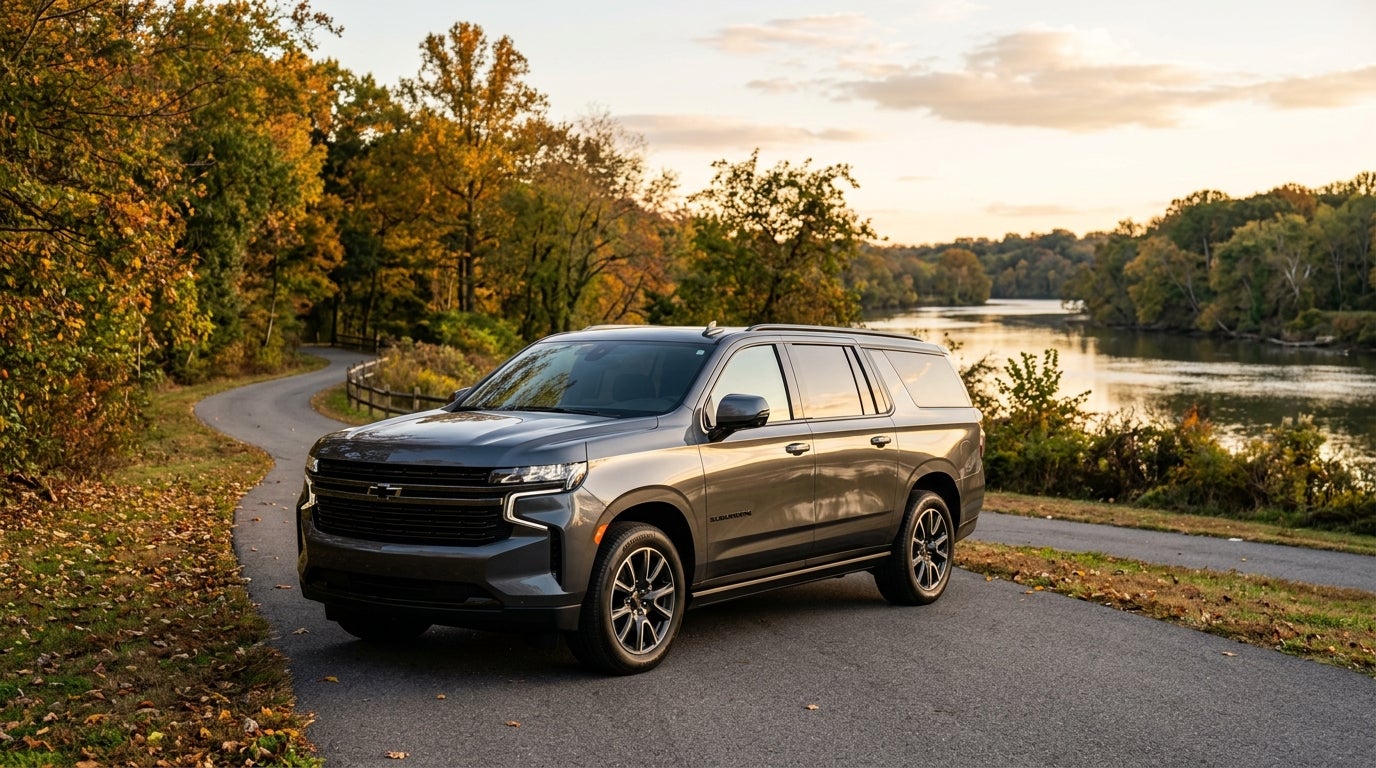
The 2026 Chevrolet Suburban stands out as a premier full-size SUV by combining a best-in-class 17.7-inch touchscreen, up to 145 cubic feet of maximum cargo volume, three capable powertrain options, and seating for up to nine passengers. With a starting base MSRP of $63,700 for the LS trim and maximum towing capabilities reaching 8,300 lbs, it delivers exceptional capability for both large family travel and heavy-duty trailering needs. Built on a legendary long-wheelbase platform, the Suburban provides 42 cubic feet of cargo space behind the third row alone, ensuring that full passenger loads never compromise luggage room. Families living near New Castle who regularly tow recreational boats to the Delaware River or haul equipment for weekend road trips rely on this spacious interior layout to accommodate gear, sports equipment, and passengers comfortably without crowding the cabin. Inside, driver-focused layout enhancements complement the premium materials across every trim. The center console is designed with practical storage compartments, while available luxury upgrades like the Power Sliding Center Console, heated and ventilated front bucket seats, and perforated leather appointments elevate everyday driving. For buyers comparing full-size three-row SUVs, the Suburban balances commercial-grade utility with refined family comfort. When you are ready to explore the lineup in person, visit our Wilmington showroom to see current availability, or give our team a quick call to learn more about upcoming arrivals. Table of Contents Which Engine Options and Duramax Specs Power the 2026 Chevrolet Suburban? What Is the Maximum Towing Capacity of the 2026 Chevrolet Suburban? What New Dashboard Screens and Super Cruise Tech Are Featured in the 2026 Suburban? What Is the 2026 Chevrolet Suburban MSRP Price Range Across Trim Levels? How to Buy, Custom Order, Finance, or Trade In a 2026 Suburban at Winner Chevrolet Quick Answers to Common 2026 Chevrolet Suburban Purchasing Questions Start Your 2026 Chevrolet Suburban Purchase at Winner Chevrolet Which Engine Options and Duramax Specs Power the 2026 Chevrolet Suburban? The 2026 Chevrolet Suburban offers three distinct engine options: a standard 5.3L EcoTec3 V8, an available 6.2L EcoTec3 V8, and a revised 3.0L Duramax Turbo-Diesel inline-six. Every engine pairs directly with an automatic 10-speed transmission and is available in either rear-wheel drive or four-wheel drive configurations. 5.3L EcoTec3 V8: Generates 355 hp and 383 lb-ft of torque. Equipped with Dynamic Fuel Management, this engine comes standard on LS, LT, RST, Z71, and Premier trims to balance proven daily power with efficient cylinder deactivation. 6.2L EcoTec3 V8: Delivers 420 hp and 460 lb-ft of torque. Standard on the flagship High Country and available on RST, Z71, and Premier, this engine gives drivers responsive acceleration for steep highway inclines and heavy hauling. 3.0L Duramax Turbo-Diesel: Produces 305 hp and an impressive 495 lb-ft of torque. Available on LT, RST, Z71, Premier, and High Country, this powertrain provides exceptional low-end pulling force and delivers up to 728 miles of EPA-estimated highway driving range on a single fuel tank. For daily commuting along the Christina River corridor in Wilmington, the Duramax Turbo-Diesel option offers smooth long-range capability, making it a favorite for drivers who take frequent multi-state highway trips. Whether you need the high-rpm horsepower of a traditional V8 or the massive torque output of a turbo-diesel, our team can help you compare performance characteristics during a test drive. Shoppers exploring full-size utility who also want to look at pre-owned inventory options can browse our broad selection of pre-owned inventory online to compare model years, powertrain setups, and feature packages before visiting the dealership. What Is the Maximum Towing Capacity of the 2026 Chevrolet Suburban? The 2026 Chevrolet Suburban achieves its maximum stated towing capacity of 8,300 lbs when equipped with the standard 5.3L V8 engine, rear-wheel drive, and the factory Max Trailering Package. Four-wheel-drive configurations and alternative engine choices maintain strong trailering numbers, with most models rated between 7,900 lbs and 8,200 lbs depending on equipment. To make heavy hauling stress-free, Chevrolet equips the Suburban with integrated trailering technology designed to improve safety and visibility: In-Vehicle Trailering App: Allows drivers to create custom trailer profiles, track mileage, complete pre-departure checklists, and run trailer light diagnostics directly from the main touchscreen. Up to 14 Camera Views: Includes specialized angles like Transparent Trailer view, Rear Trailer view, and Inside Trailer view to simplify maneuvering in tight parking lots or backing up to launch ramps. Super Cruise with Trailering: Available hands-free driving technology that recognizes when a trailer is attached and automatically adjusts the braking gap to the vehicle ahead. Blind Zone Steering Assist with Trailering: Extends side blind-zone monitoring along the entire length of the towed trailer to warn of vehicles in adjacent lanes. Properly spec'd with heavy-duty cooling components, an integrated trailer brake controller, and hitch view camera software, the Suburban easily handles double-axle travel trailers, horse trailers, and large boats. Our sales specialists can walk you through exact gross vehicle weight ratings (GVWR) and axle ratios to ensure your vehicle matches your exact towing needs. What New Dashboard Screens and Super Cruise Tech Are Featured in the 2026 Suburban? The 2026 Suburban's dashboard features a groundbreaking 17.7-inch touchscreen, the largest in its class, enhancing driver interaction and visibility. This dual-screen dashboard architecture replaces traditional analog dials with crisp, customizable digital displays that display navigation, media, and vehicle diagnostics in high definition. The infotainment setup features built-in Google compatibility, providing native access to Google Maps navigation, voice-activated assistance, and app downloads through Google Play. Standard wireless Apple CarPlay and wireless Android Auto support seamless smartphone integration, while an available 15-inch Head-Up Display projects speed limit indicators, turn-by-turn navigation arrows, and active driver-assist warnings directly onto the windshield. For highway driving ease, Super Cruise hands-free driver assistance technology is available on LT, RST, Premier, and High Country models. Operating on hundreds of thousands of miles of compatible access-controlled highways across North America, Super Cruise manages steering, acceleration, and lane changes automatically while monitoring driver attentiveness. Standard safety systems across the lineup include Enhanced Automatic Emergency Braking, Intersection Automatic Emergency Braking, Reverse Automatic Braking, and Adaptive Cruise Control. Buyers searching for connected SUV models can check out our current new Chevrolet Suburban selection to filter by technology packages, interior color options, and screen configurations. What Is the 2026 Chevrolet Suburban MSRP Price Range Across Trim Levels? The 2026 Chevrolet Suburban lineup spans six distinct trim levels, starting at a base MSRP of $63,700 for the entry-level LS 2WD and reaching $86,700 for the fully loaded High Country 4WD. Every trim carries a standard manufacturer destination charge of $2,795. Here is how starting MSRP figures compare across the 2026 Suburban trim range: LS 2WD: $63,700 base MSRP ( LS 4WD: $66,700) — Features the 5.3L V8, 17.7-inch touchscreen, 11-inch digital cluster, and standard safety suite. LT 2WD: $66,700 base MSRP ( LT 4WD: $69,700) — Adds leather-appointed seating, heated front bucket seats, wireless device charging, and a power liftgate. RST 2WD: $71,700 base MSRP ( RST 4WD: $74,700) — Offers aggressive sport styling with Black Ice exterior trim, Victory Red interior stitching, and available 24-inch Carbon Flash wheels. Z71 4WD: $73,700 base MSRP — Off-road ready with standard 4WD, high-approach front fascia, aluminum skid plate, red recovery hooks, and 20-inch Goodyear Wrangler Territory all-terrain tires. Premier 2WD: $78,600 base MSRP ( Premier 4WD: $81,600) — Focuses on luxury with animated LED lighting, Power Sliding Center Console, Bose 10-speaker audio, and heated/ventilated seating. High Country 2WD: $83,700 base MSRP ( High Country 4WD: $86,700) — Standard 6.2L V8, Magnetic Ride Control, authentic wood interior accents, and 15-inch Head-Up Display. Selecting four-wheel drive adds $3,000 to the base price on two-wheel-drive trims. Upgrading to the 3.0L Duramax Turbo-Diesel or adding options like the Four-Corner Air Ride Adaptive Suspension allows buyers to tailor capability and luxury to their exact preferences. How to Buy, Custom Order, Finance, or Trade In a 2026 Suburban at Winner Chevrolet Buying a 2026 Chevrolet Suburban at Winner Chevrolet is simple and tailored to your timeline. Shoppers can choose an in-stock model from our showroom floor or work directly with our vehicle specialists to place a factory custom order, selecting specific paint colors, interior seating configurations, axle ratios, and package add-ons directly from the assembly schedule. When preparing for your purchase, our finance department works with competitive lenders to help you explore financing options that fit your budget. You can easily start the purchasing process online from home: Evaluate Your Current Vehicle: Use our online tool to value your trade-in and receive a prompt, competitive appraisal offer that can be applied directly toward your down payment. Apply for Financing: Complete our secure application to apply for financing online to get current information before arriving at the dealership. Select Your Delivery Method: Choose to pick up your new Suburban at our showroom or coordinate delivery timing with our sales team once your custom order arrives from the factory. Families looking at full-size SUVs often ask our team whether they can order specific options like the air suspension or diesel engine directly from the factory before making a final buying decision. Our consultants walk you through every option code, production schedule estimate, and standard feature comparison so you feel completely confident in your selection. Quick Answers to Common 2026 Chevrolet Suburban Purchasing Questions Q: Can I custom order a 2026 Chevrolet Suburban with specific trim options? Yes, Winner Chevrolet offers complete custom ordering services for the 2026 Chevrolet Suburban. Buyers can select their preferred trim level, engine configuration, exterior color, trailering packages, and interior seating layouts. Our vehicle consultants handle the order submission directly with the factory and help keep you informed about your order status until delivery. Q: Does Super Cruise hands-free technology work while towing a trailer? Yes, the available Super Cruise driver assistance system on the 2026 Suburban includes specific trailering software functionality. When pulling a compatible trailer, the system includes trailering-related functionality designed to support towing when conditions and equipment allow. Q: What documents should buyers bring to complete a vehicle purchase or trade-in? To complete your purchase or trade-in quickly, bring a valid government-issued driver's license, current auto insurance card, and your most recent pay stubs or proof of income if applying for financing. If trading in a vehicle, bring the clean vehicle title (or current lienholder payoff information), registration documents, and all sets of original keys or key fobs. Q: How does the 3.0L Duramax Turbo-Diesel engine compare in highway driving range? The revised 3.0L Duramax Turbo-Diesel inline-six produces 305 horsepower and 495 lb-ft of torque, offering up to 728 miles of EPA-estimated highway driving range on a single fuel tank in two-wheel-drive configurations. This extended highway range makes the diesel engine an ideal choice for buyers who regularly travel long distances or haul heavy cargo over highway routes. Q: Is all-wheel drive available across every 2026 Suburban trim level? Four-wheel drive is available as an option across every 2026 Suburban trim level (LS, LT, RST, Premier, and High Country) and comes standard on the off-road Z71 trim. Single-speed or Autotrac two-speed active transfer cases are offered depending on the trim and package selected, giving drivers confident traction in rain, mud, or winter weather. Start Your 2026 Chevrolet Suburban Purchase at Winner Chevrolet With seating for nine, a towing capacity up to 8,300 lbs, and advanced Super Cruise technology, the 2026 Suburban meets diverse driver needs. Our knowledgeable sales team at Winner Chevrolet is here to help you compare engine choices, evaluate trade-in offers, and explore flexible vehicle financing packages. Visit our dealership showroom today to take a test drive, or give our team a quick call to begin your custom order or vehicle inquiry. Keep Your Vehicle Running Strong Keep your vehicle performing at its best with our service team: Schedule Service © 2026 Winner Chevrolet. All rights reserved. Vehicle specification data © JATO Dynamics Limited.

Contact Us

Fill out this form below and we'll contact you shortly
*Required Fields