




Winner Chevrolet of Wilmington

Blog / Winner Chevrolet of Wilmington Service

Blog

All Winner Chevrolet of Wilmington Service New Vehicle Reviews Buying Guides Financing & Insurance Maintenance & Service Model Comparisons Technology & Innovation Leasing Guides New Vehicle Sales Online Car Buying & Home Delivery Safety Features Used Vehicle Guides Wilmington Chevrolet Dealer Vehicle Inventory Updates Dealership News & Updates Trade-In & Leasing Options Certified Pre-Owned Vehicles Electric Vehicles Inventory Comparisons Regional Tax & Fee Insights Electric Vehicles & Incentives Towing & Hauling Guides Truck Technology & Features Wilmington Chevrolet Service
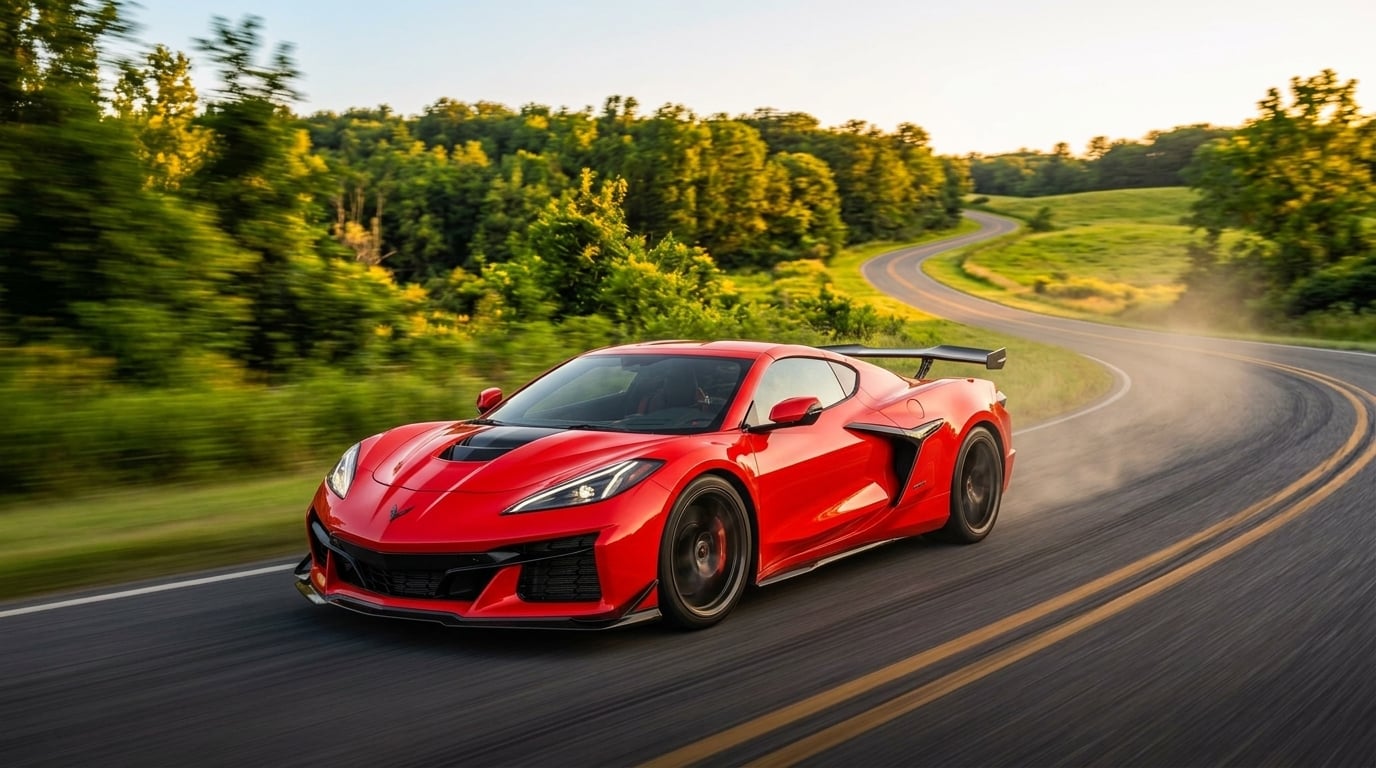
A wide-shot cinematic photograph of a powerful 2026 Chevrolet Corvette ZR1 carving through a gentle asphalt curve on a dynamic summer drive, action shot with motion blur across the spinning wheels and blurring foliage, captured from a low three-quarter camera angle, aggressive aerodynamic body sculp

Unlock Blazing Performance: Inside Chevy’s 2026 Corvette’s Lightning-Fast Lineup

The 2026 Chevy Corvette accelerates from 0 to 60 mph in 2.9 seconds when the base Stingray is equipped with the Z51 Performance Package, while the all-wheel-drive E-Ray reaches 60 mph in 2.5 seconds, the track-focused Z06 hits 60 mph in 2.6 seconds, the twin-turbocharged ZR1 achieves 60 mph in under 2.5 seconds with top speeds exceeding 215 mph, and the range-topping ZR1X achieves 0 to 60 mph in under 2.0 seconds. more | Corvette Model | Engine / Powertrain | Horsepower / Torque | 0-60 MPH Time | | --- | --- | --- | --- | | Stingray | 6.2L LT1 V8 | 495 hp / 465 lb-ft | 2.9 seconds (Z51) | | E-Ray | 6.2L V8 + Front Motor | 655 hp / 470 lb-ft | 2.5 seconds | | Z06 | 5.5L LT6 Flat-Plane V8 | 670 hp / 460 lb-ft | 2.6 seconds | | ZR1 | 5.5L LT7 Twin-Turbo V8 | 1,064 hp / 828 lb-ft | < 2.5 seconds | | ZR1X | 5.5L TT V8 + eAWD | 1,250 hp / 828 lb-ft | < 2.0 seconds | Every variant in the lineup utilizes an 8-speed dual-clutch automatic transmission that executes gear shifts in milliseconds, ensuring continuous power transfer to the pavement. The standard 6.2L LT1 V8 engine delivers 490 horsepower and 465 lb-ft of torque in its baseline configuration, while the performance exhaust package increases output to 495 horsepower. Placing the powertrain behind the driver shifts the vehicle's weight bias rearward, improving traction off the line and maximizing acceleration out of sharp corners. This architectural shift allows the chassis to deliver exotic-car dynamics during spirited drives along scenic routes in Wilmington. Drivers can select tailored launch control parameters and adjustable steering feedback through six distinct drive modes. To explore available allocation details in person, stop by our showroom on Pennsylvania Avenue or give our staff a quick call to discuss build options. Table of Contents What Are the Performance Specs of the 2026 Corvette Z06 and E-Ray? What Engine Powers the 2026 Corvette ZR1 and What Is Its Top Speed? Is the 2026 Chevrolet Corvette Compared with a Porsche 911? Are Chevrolet Dealers Charging Over MSRP for the Corvette ZR1? Common Questions About 2026 Chevy Corvette Performance Experience 2026 Chevy Corvette Performance What Are the Performance Specs of the 2026 Corvette Z06 and E-Ray? The 2026 Corvette Z06 produces 670 horsepower and 460 lb-ft of torque from its naturally aspirated 5.5L LT6 V8 flat-plane crank engine with an 8,600 RPM redline, whereas the electrified Corvette E-Ray pairs a rear-mounted 6.2L V8 with a front electric motor to output a combined 655 horsepower and 470 lb-ft of engine torque plus 125 lb-ft of electric torque through an electrified all-wheel-drive system. The Z06 engineered engine revs higher than traditional cross-plane V8s, generating a distinctive exhaust note reminiscent of endurance race cars. For drivers seeking maximum track precision, the optional Z07 Performance Package equips stiffer suspension tuning, carbon-ceramic brake rotors, and specialized aerodynamic ground effects. A new driver setting called PTM Pro allows experienced track drivers to disengage traction and stability intervention while retaining antilock braking control. In contrast, the E-Ray utilizes a 1.1-kWh lithium-ion battery pack to power its front electric motor without requiring plug-in charging. This eAWD powertrain adjusts front-to-rear torque distribution dynamically, giving drivers supreme grip during acceleration on open highway stretches past Newark. The standard MagneRide suspension system reads road surfaces thousands of times per second to automatically balance ride compliance with high-speed body control. Prospective buyers can check our selection of new Chevrolet models to review current arrivals and factory ordering windows. ​ What Engine Powers the 2026 Corvette ZR1 and What Is Its Top Speed? The 2026 Corvette ZR1 is powered by a 5.5L twin-turbocharged LT7 flat-plane crank V8 engine producing 1,064 horsepower and 828 lb-ft of torque, reaching an estimated top speed exceeding 215 mph and completing a quarter-mile sprint in under 9.7 seconds at over 150 mph. Engineers fitted the 5.5L LT7 Twin-Turbo V8 with dual turbochargers integrated into the exhaust manifolds to virtually eliminate turbo lag. The engine uses specialized head castings, strengthened valvetrain components, and enhanced oiling systems to manage the intense thermal loads generated at full throttle. For ultimate performance, the ZR1X combines this twin-turbo V8 engine with the front axle electric motor, elevating total output to 1,250 horsepower. Aerodynamic efficiency plays a crucial role in maintaining stability at high speeds. The available carbon-fiber aero package includes a prominent rear wing, front dive planes, and underbody venturi tunnels that generate over 1,200 pounds of downforce at track velocities. Massive 16.5-inch carbon-ceramic brake discs provide immediate stopping power to keep this performance under complete control. Shoppers cross-shopping high-output sports cars can browse our inventory of pre-owned vehicles to compare performance benchmarks across model generations. ​ Is the 2026 Chevrolet Corvette Compared with a Porsche 911? The 2026 Chevrolet Corvette Stingray carries a starting price of $70,000, delivering 490 horsepower, while a base Porsche 911 Carrera starts around $137,850 with 388 horsepower, giving the Corvette a distinct advantage in horsepower per dollar. | Model / Trim | Starting MSRP | Horsepower | Drivetrain | | --- | --- | --- | --- | | Corvette Stingray 1LT | $70,000 | 495 hp | Rear-Wheel Drive | | Porsche 911 Carrera | $137,850 | 388 hp | Rear-Wheel Drive | | Corvette Z06 1LZ | $117,700 | 670 hp | Rear-Wheel Drive | | Porsche 911 GT3 | $238,150 | 502 hp | Rear-Wheel Drive | Stepping up to higher performance tiers maintains this comparative value gap. The Corvette Z06 1LZ starts at $117,700, offering 670 horsepower from its high-revving V8, whereas the competing Porsche 911 GT3 commands a starting price of $238,150 for 502 horsepower. Even when optioned with premier packages like the 3LT equipment group or interior carbon-fiber trim, the Corvette remains competitively positioned relative to European exotics. Practical ownership benefits further enhance the Corvette's everyday appeal: Front and rear trunk compartments provide a combined 13 cubic feet of cargo capacity, capable of holding golf bags or luggage. Standard factory warranty coverage includes a 3-year/36,000-mile basic warranty and a 5-year/60,000-mile powertrain warranty. First scheduled maintenance visit is covered at no additional cost. An intuitive infotainment layout features a 14.0-inch digital instrument display and a 12.7-inch central touchscreen for effortless operation. Maintaining peak engine health requires regular factory-recommended care. Owners can conveniently schedule your service appointment with our certified maintenance team. ​ Are Chevrolet Dealers Charging Over MSRP for the Corvette ZR1? Due to limited production allocations and high international demand, many dealerships nationwide place market adjustments above MSRP on ultra-high-performance models like the Corvette ZR1 and ZR1X, though high-volume dealers prioritize selling at sticker price for customers on structured allocation waitlists. When evaluating halo vehicles with extreme power figures, securing a production slot requires working closely with established dealership allocation channels. Market conditions for high-demand sports cars depend heavily on factory output rates, regional distribution quotas, and initial customer order volumes. Buyers who place custom factory orders early often secure preferred build scheduling compared to off-the-floor purchases. To simplify the purchase process, our finance specialists walk buyers through transparent reservation agreements, trade-in valuations, and timeline estimates. Capitalizing on pre-existing vehicle equity can significantly offset overall acquisition costs when securing a custom build slot. Shoppers planning their purchase can value your trade-in online to establish an accurate starting budget before placing a factory reservation. ​ Common Questions About 2026 Chevy Corvette Performance Q: Why does the mid-engine layout matter for Corvette performance? The mid-engine architecture positions the V8 engine directly behind the cockpit, shifting weight over the drive wheels. This layout improves rear-wheel traction during hard acceleration, reduces understeer when entering turns, and delivers immediate steering response during rapid direction changes. Q: Can the 2026 Corvette E-Ray be driven in winter weather? Yes, the Corvette E-Ray is designed for four-season performance. Its electrified all-wheel-drive system actively monitors traction, transferring power to the front electric motor whenever rear-wheel slip is detected. Standard high-performance all-season tires further enhance grip on cold or wet pavement. Q: What digital performance tracking technology is included inside the cabin? The 2026 Corvette features an integrated Performance Data Recorder that logs vehicle telemetry, high-definition lap video, speed, acceleration g-forces, and gear selection. The updated cabin software also displays real-time tire temperature gauges, engine vitals, and customized acceleration timers. Q: What is the difference in driving feel between the Stingray and the Z06? The Stingray utilizes a 6.2L LT1 V8 tuned for robust low-end torque and comfortable daily driving. The Z06 features a naturally aspirated 5.5L LT6 V8 flat-plane crank engine that revs up to 8,600 RPM, delivering aggressive track-focused throttle response, firmer chassis dampening, and a louder exhaust note. Q: How does factory pre-qualification help when placing a Corvette order? Securing pre-qualification simplifies the order submission process, confirming budget parameters before locking in custom paint, trim, and performance options. When custom order banks open, pre-verified buyers can finalize their allocation submission without administrative delays. Buyers can easily prequalify for financing online to prepare for their upcoming order. ​ Experience 2026 Chevy Corvette Performance With over five distinct trims, the 2026 Corvette offers a spectrum of performance options tailored to diverse driving preferences and conditions. Featuring advanced dual-clutch transmissions, mid-engine chassis balance, and driver-focused cabin technology, every Corvette is engineered to deliver world-class performance. When buyers compare variants on our showroom floor, they frequently ask about the acceleration times and launch control features before selecting interior trim packages. Our knowledgeable staff is here to answer your technical questions, walk you through factory option codes, and assist with custom build reservations. To inspect current inventory or discuss upcoming production allocations, visit our dealership on Pennsylvania Avenue or call our team directly at (302) 267-4800 to take the next step toward owning your dream performance vehicle. © 2026 Winner Chevrolet. All rights reserved.

Futuristic diagram of an SUV showing oil change steps: dexos oil, ACDelco filter, tire rotation, and oil life reset. (Representative image for illustration purposes only. Actual vehicle may vary based on trim and configuration.)

What Does a Complete Chevrolet Oil Change Service Include?

A complete Chevrolet oil change service includes draining used engine oil, replacing it with General Motors factory-recommended dexos certified oil, installing an original equipment ACDelco oil filter, performing a comprehensive multi-point vehicle safety inspection, rotating all four tires to encourage even tread wear, and resetting the onboard Engine Oil Life System. more Maintaining fresh engine oil is vital for protecting high-precision engine components against thermal breakdown, friction, and harmful sludge build-up. Modern Chevrolet powerplants operate under high combustion pressures and tight mechanical tolerances. Replacing depleted fluid with fresh lubricant ensures that internal valve trains, bearings, and turbocharger shafts remain properly coated during daily operations across local city corridors. During a standard service visit, our technicians remove the lower oil drain plug to evacuate contaminated fluid, replace the sealing washer, and install an ACDelco micro-glass filter engineered with exact anti-drainback valve pressure. This anti-drainback mechanism prevents fluid from draining into the sump when the ignition is switched off, eliminating dry metallic friction during cold starts on damp Mid-Atlantic mornings. The engine is then filled with the exact volume and viscosity specified by General Motors engineering. A full maintenance visit goes well beyond draining and replacing fluid. Every vehicle passing through our service bay receives a thorough vehicle checkup to identify potential wear items before they turn into costly breakdowns. If you need assistance bringing your vehicle in, you can easily find our service center location at 2101 Pennsylvania Ave or reach out by calling (302) 267-4800 to speak with a service consultant. Table of Contents Is Synthetic Oil Recommended for Chevrolet Engines? How Often Should Your Chevrolet Get an Oil Change and How Does the Oil Life Monitor Work? What Is Checked During a Multi-Point Inspection and Why Is Tire Rotation Recommended? Do Quick Lube Shops Update Chevrolet Factory Warranty Maintenance Databases? How to Book Chevrolet Oil Change Service and What Are Department Hours? Frequently Asked Questions About Chevrolet Maintenance Keep Your Chevrolet Running Smoothly on Delaware Roads Is Synthetic Oil Recommended for Chevrolet Engines? Full synthetic oil is strongly recommended—and for most late-model vehicles, mandatory—to meet General Motors dexos1 Gen 3 engineering standards. Modern turbocharged EcoTec engines and high-output V8 engines require specialized synthetic chemistry to resist thermal degradation and prevent destructive pre-ignition events. General Motors mandates that gasoline-powered vehicles from model year 2011 forward use dexos certified engine oil. For modern model years, the upgraded dexos1 Gen 3 standard is required. This technical specification is met by high-performance full synthetic oils in formulations such as 0W-20 or 5W-30 that carry current API SP and ILSAC GF-6A ratings. Turbocharged 3-cylinder and 4-cylinder engines generate extreme operating temperatures near the turbine housing. Conventional mineral-based oils breakdown rapidly under this severe heat, creating carbon deposits known as coking that can destroy turbocharger bearings. Full synthetic lubricants also provide protection against Low-Speed Pre-Ignition (LSPI). LSPI is an abnormal combustion event where the air-fuel mixture ignites prematurely at low engine speeds under heavy load. This anomaly can generate severe cylinder pressure spikes capable of cracking pistons and damaging connecting rods. The detergent additives and molecular stability engineered into dexos1 Gen 3 full synthetics specifically neutralize the chemical triggers of LSPI. Full synthetic oil maintains consistent viscosity across extreme temperature shifts. During winter cold snaps, synthetic fluid flows immediately upon engine startup to protect overhead valvetrains. During hot summer driving, synthetic fluid resists oxidation, evaporation, and thinning. For heavy-duty diesel powerplants such as the 3.0L Duramax or 6.6L Duramax, GM specifies low-SAPS dexosD diesel synthetic oil to protect delicate exhaust aftertreatment systems and Diesel Particulate Filters (DPFs). Chevrolet Vehicle Class Typical Engine Options Required Viscosity Mandated Specification Fluid Volume (Approx.) Compact & Midsize Crossovers 1.2L Turbo / 1.5L Turbo 0W-20 / 5W-30 dexos1 Gen 3 4 to 5 Quarts Three-Row SUVs & Full-Size Pickups 5.3L V8 / 6.2L V8 0W-20 dexos1 Gen 3 8 Quarts Light-Duty Diesel Trucks 3.0L Duramax Turbo-Diesel 0W-20 dexosD 7 Quarts Heavy-Duty Diesel Trucks 6.6L Duramax Turbo-Diesel 5W-40 / 15W-40 dexosD 10 Quarts ​ How Often Should Your Chevrolet Get an Oil Change and How Does the Oil Life Monitor Work? Most modern Chevrolet vehicles require an oil change every 7,500 to 10,000 miles under normal driving conditions, or at least once every 12 months. The precise interval is determined automatically by the onboard Engine Oil Life System, which calculates fluid degradation based on real-world driving variables. Rather than relying on a static mileage counter or traditional windshield sticker, the Engine Oil Life System uses a predictive software algorithm stored in the engine control module. This system continually tracks operating metrics to determine when the lubricant has depleted its protective additives. Key variables calculated by the system include: Total cumulative engine revolutions and shaft workloads Ambient air temperatures and cold startup frequencies Average oil operating temperatures and sustained high-heat engine runs Total idling time and low-speed stop-and-go driving duration Short trips under 5 miles prevent the engine from reaching optimal operating temperatures, allowing moisture and unburned fuel contaminants to collect in the oil pan. Frequent city driving, heavy payload hauling, and extended idling cause the monitor to count down faster, signaling an oil change requirement closer to 5,000 or 6,000 miles. Conversely, sustained highway cruising at stable temperatures preserves fluid longevity toward the 10,000-mile upper boundary. When fluid life drops below 15 percent, the driver information screen displays a prompt reading "Change Engine Oil Soon." Drivers should schedule maintenance within the next 600 miles of this warning appearing. After service is performed, our technicians manually reset the monitoring system through the steering wheel controls, returning the indicator display to 100 percent. ​ What Is Checked During a Multi-Point Inspection and Why Is Tire Rotation Recommended? A multi-point inspection checks critical mechanical, electrical, and hydraulic components to verify safety, while a tire rotation ensures even tread wear across all four wheel positions. Combining these services with every 7,500-mile oil change maintains overall vehicle health and prevents unexpected roadside breakdowns. During a multi-point inspection, factory-trained technicians examine key vehicle systems using a color-coded reporting standard (green for optimal condition, yellow for items requiring future attention, and red for immediate service needs). The inspection process evaluates several essential vehicle systems: Brake components: Inspecting front and rear brake pad thickness, rotor surface condition, caliper sliders, and hydraulic line integrity. Battery and electrical health: Performing a digital conductance test to evaluate cold cranking amps, terminal corrosion, and charging system output. Underhood fluid levels: Verifying condition and fill levels for transmission fluid, engine coolant, power steering fluid, and washer fluid. Engine air and cabin filters: Checking filters for dirt accumulation, leaf debris, and restricted airflow. Steering and suspension: Inspecting shock absorbers, struts, ball joints, tie rod ends, and CV axle boots for leaks or mechanical play. Rotating tires every 7,500 miles is essential because front and rear tires experience vastly different cornering and braking forces. On front-wheel-drive crossovers commuting near the university campus in Newark, the front tires handle steering inputs, power delivery, and up to 70 percent of braking force. This causes front tires to wear down twice as fast as rear tires if left in place. Regular tire rotations balance tread wear patterns across the set, extending total tire lifespan and maintaining wet-weather traction. For vehicles equipped with all-wheel-drive systems, maintaining equal tread depth across all four tires prevents unwanted mechanical stress on transfer cases and electronic center differentials. To keep your vehicle's maintenance records complete, you can easily schedule a certified maintenance appointment online. ​ Do Quick Lube Shops Update Chevrolet Factory Warranty Maintenance Databases? Independent quick lube outlets do not have access to General Motors proprietary software networks and cannot log your maintenance history into the central GM service database. Servicing your vehicle at an authorized service department ensures that every oil change is electronically linked to your Vehicle Identification Number (VIN). Maintaining verifiable service documentation is crucial for preserving your factory powertrain limited warranty. If a major internal component like a camshaft solenoid or crankshaft bearing fails during the coverage period, GM warranty adjusters require documented proof that the engine received factory-approved lubricants at proper intervals. Drivers relying on independent lube shops must save printed paper receipts. Over time, thermal paper receipts can fade, get misplaced, or fail to clearly list the exact oil specification used. | GENERAL MOTORS WARRANTY DATA SYSTEM | | --- | | | | -> Automatic VIN Service Entry | | -> Factory-Approved dexos1 Gen 3 Verification | | -> ACDelco OEM Filter Part Number Logged | | -> Accessible Nationwide by Any GM Dealer | | | | -> No GM Database Connection | | -> Manual Paper Receipt Required | | -> Risk of Generic Bulk/Uncertified Oil Usage | | -> Customer Bears Full Burden of Document Proof | Fast-lube drive-thru centers often use high-volume bulk oil tanks containing generic conventional oil or non-certified synthetic blends. Using unapproved lubricants can compromise internal hydraulic systems like Active Fuel Management (AFM) or Dynamic Fuel Management (DFM). These systems rely on ultra-clean fluid to actuate cylinder-deactivation solenoids. Uncertified oils lack the necessary anti-foaming agents and thermal stability, which can lead to valve tick, lifter damage, and potential warranty claim denials. Authorized Chevrolet service departments install genuine ACDelco filters featuring structural bypass valves calibrated to exact GM oil pressure specifications. Inexpensive aftermarket filters may utilize lower-grade filtration paper or weak silicone drainback valves, allowing oil to drain into the pan overnight and causing dry metallic friction during initial engine startup. ​ How to Book Chevrolet Oil Change Service and What Are Department Hours? Booking a certified oil change service is straightforward using digital scheduling platforms or direct phone assistance. Service departments offer extended weekday and Saturday operating hours designed to accommodate busy work schedules and family commitments. You can organize your maintenance schedule through the myChevrolet mobile application. The app connects wirelessly to your vehicle’s telemetry system, transferring current mileage and Engine Oil Life System status directly to our service portal. Alternatively, our website booking tool allows you to select customized service packages, choose preferred factory-trained technicians, and pick convenient morning or afternoon drop-off times. Our certified service department operates during the following schedule: Monday through Friday: 7:30 AM to 5:00 PM Saturday: 8:00 AM to 1:00 PM Sunday: Closed Drivers using our Express Service lane can drop off their vehicle for routine fluid changes, tire rotations, and multi-point inspections without long delays. While our certified technicians complete your service, you can relax in our quiet customer lounge equipped with high-speed Wi-Fi, work stations, and refreshments. If you prefer to drop off your vehicle and head home or back to the office, local shuttle transport options can be arranged upon arrival. Drivers planning a visit can easily find driving directions to our service center online or get personalized scheduling help by calling our service department directly. ​ Frequently Asked Questions About Chevrolet Maintenance Q: How do you reset the Chevy Oil Life Monitor after completing an oil change? The Oil Life Monitor is reset through the driver information cluster on your steering wheel controls. Navigate to the Info menu, scroll to the Oil Life screen, press and hold the Checkmark or Select button for several seconds until the screen beeps and the display resets to 100 percent. Q: What is the main difference between dexos1 Gen 3 and generic synthetic motor oil? General Motors engineered dexos1 Gen 3 to meet strict performance metrics that standard industry oil specifications do not mandate. The dexos1 Gen 3 standard includes specific chemical tests for Low-Speed Pre-Ignition mitigation, timing chain wear resistance, oxidation stability, and deposit control in high-temperature direct-injected engines. Q: Can a Chevrolet engine oil change be combined with annual state vehicle safety checks? Yes, maintenance visits can bundle routine fluid changes, tire rotations, multi-point inspections, and state safety checks into a single service visit. Combining these requirements saves time and ensures your vehicle remains compliant with both factory maintenance schedules and state road regulations. Q: How long does a routine Chevy oil change and inspection take? A routine oil change, filter replacement, tire rotation, and multi-point inspection typically takes between 30 and 60 minutes when scheduled in advance. Service lanes are structured for quick turnaround so you can return to your daily schedule without unnecessary disruption. Q: Will using non-certified engine oil immediately void my factory powertrain warranty? Using non-certified oil may affect warranty coverage if damage results from improper or unapproved lubricants; refer to your owner's manual or contact the dealership for details. Insisting on dexos certified oil protects your powertrain coverage. ​ Keep Your Chevrolet Running Smoothly on Delaware Roads Regular oil changes and preventative maintenance are the best ways to protect your vehicle's reliability, towing capability, and resale value. Whether you commute daily along urban corridors or haul cargo on weekend trips, maintaining fresh dexos synthetic fluid and original ACDelco filters keeps your engine running strong mile after mile. Our team of factory-trained technicians is dedicated to delivering fast, transparent, and accurate service for every Chevrolet car, crossover, truck, and SUV. To keep your maintenance history documented and your engine protected under factory guidelines, schedule your next maintenance appointment with Winner Chevrolet today. © 2026 Winner Chevrolet. All rights reserved.

Contact Us

Fill out this form below and we'll contact you shortly
*Required Fields