





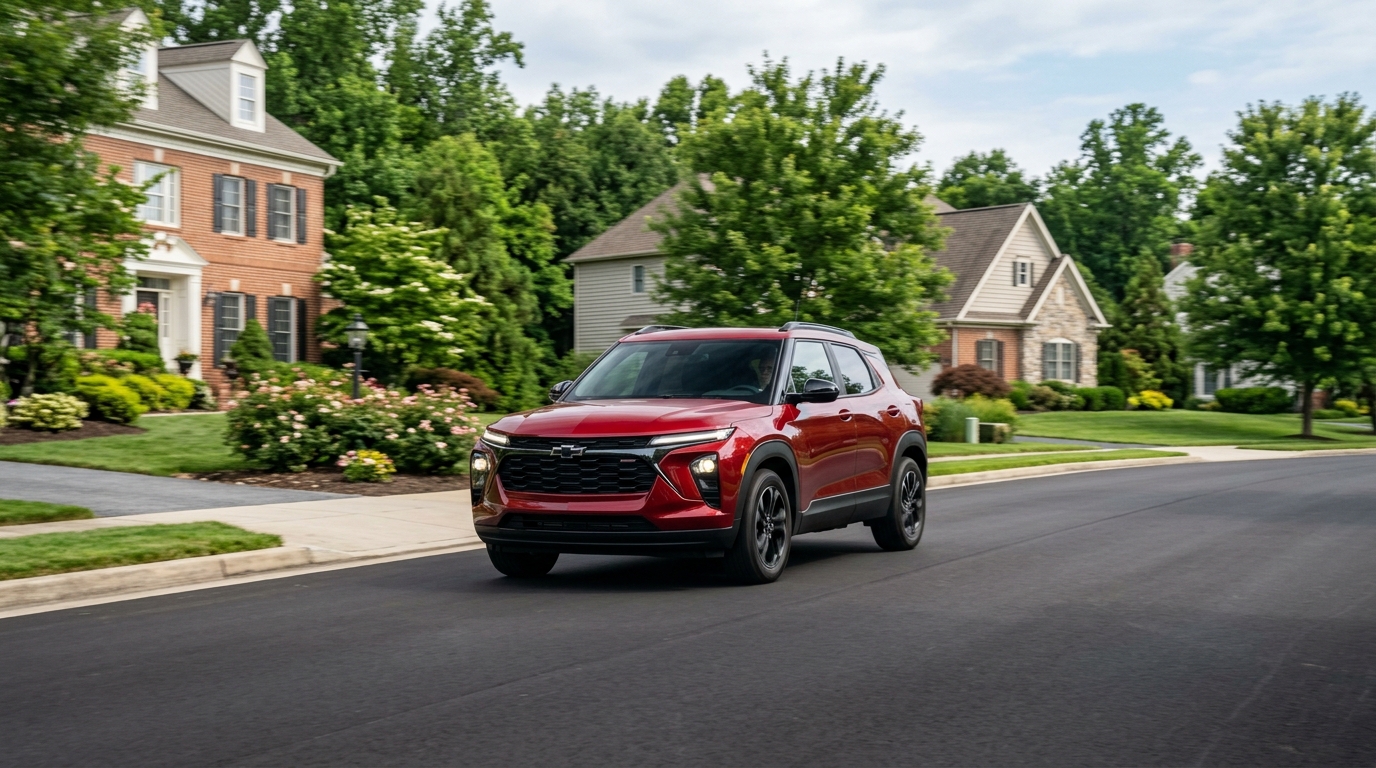
 Choosing between buying and leasing often comes down to how you plan to use your vehicle on a daily basis. A Chevrolet lease is structured as a long-term rental agreement where you drive a brand-new vehicle for a set period, typically ranging from 24 to 48 months. During this time, you make fixed monthly payments to cover the vehicle’s depreciation rather than its entire purchase value. Once the contract ends, you simply return the vehicle to the dealership, making this an incredibly flexible option for drivers who enjoy driving a new car every few years with the latest technology and safety features.
The financial structure of a lease relies on several key components, including the vehicle’s residual value and the money factor. National promotional offers frequently lower these rates on popular models. For example, well-qualified lessees can often find highly competitive 36-month lease offers on models like the 2026 Chevrolet Equinox LS. Or the 2026 Chevrolet Trailblazer with monthly payments hovering around $299 and an amount due at signing ranging between $5,800 and $6,600. The total cash due at signing varies widely from $1,000 to over $6,000 depending on the specific trim level, down payment, and regional incentives.
For residents in the region, leasing offers a practical way to manage daily driving needs. Commuters traveling regularly to the University of Delaware campus in Newark often find that leasing a fuel-efficient Chevrolet SUV aligns perfectly with their routine, providing modern cabin comforts and active safety systems without the long-term commitment of ownership. If you want to explore these options in person, you can easily find our Pennsylvania Avenue showroom or get answers to your initial questions by calling our team directly at (302) 267-4800.
Table of Contents
- Credit Score Standards and Required Documents for Your Lease Application
- Insurance Limits and Capitalizing the Vehicle Document Fee
- Comparing Delaware Document Fees to Maryland Out of State Lease Taxes
- Options for Early Lease Termination and Managing Your Annual Mileage
- Answers to Common Questions About Leasing a Chevrolet
- Start Your New Chevrolet Lease Journey at Winner Chevrolet
Credit Score Standards and Required Documents for Your Lease Application
Securing an attractive lease rate requires meeting specific credit benchmarks and providing key financial documentation. Underwriters look closely at your credit history to determine your tier level, which directly impacts the money factor applied to your contract. While a credit score of 700 and above typically positions you for Tier 1 programs and the lowest monthly payments, competitive options remain available for those in the mid-to-high 600s under Tier 2 and Tier 3 guidelines.
When you are ready to apply, having your paperwork organized ensures a smooth and efficient process at the dealership. You will need to present several standard documents to verify your application details:
- A valid driver’s license to confirm your identity and driving status.
- Recent pay stubs or bank statements as verifiable proof of steady income.
- A utility bill or official mail to confirm your current physical residence.
- An active auto insurance policy that meets the lessor’s specific coverage limits.
To save time before visiting our showroom, you can complete our secure online credit application from the comfort of your home. If you decide that leasing a new model is not the right fit for your budget, our team can also guide you through our diverse pre-owned vehicle inventory to find a reliable purchase option that matches your financial goals.
Insurance Limits and Capitalizing the Vehicle Document Fee
Because the leasing company retains ownership of the vehicle during your contract, they require specific auto insurance coverage limits to protect their asset. In Delaware, standard minimum liability coverage is not sufficient for a leased vehicle. Most leasing institutions, including GM Financial, mandate bodily injury liability limits of at least $100,000 per person and $300,000 per accident, along with a property damage liability limit of $50,000. These higher limits ensure comprehensive protection on the road, though they may slightly adjust your monthly insurance premiums.
Another important financial aspect of leasing in Delaware is the state’s 4.25% motor vehicle document fee. This fee is assessed on the purchase price of the vehicle or, in the case of a lease, on the total value of the lease payments. To minimize your out-of-pocket expenses on delivery day, you have the option to capitalize this document fee. Capitalization means the fee is rolled directly into your gross capitalized cost, allowing you to pay it incrementally over your 24-month or 36-month lease term instead of paying the entire amount upfront at signing.
This payment structure is highly popular among suburban drivers who want to keep their initial acquisition costs as low as possible. For example, families commuting daily along the Route 40 corridor in Bear appreciate the ability to drive a brand-new vehicle with advanced safety features while keeping their upfront cash conserved for other household needs. If you are interested in exploring our current lineup, you can browse our online new Chevrolet inventory and use our digital value your current trade in tool to see how your current vehicle’s equity can be applied toward your next lease.
Comparing Delaware Document Fees to Maryland Out of State Lease Taxes
Understanding how regional tax structures differ is crucial for tri-state area drivers, as registering a vehicle in a neighboring state can drastically change your overall lease expenses. Delaware does not impose a traditional state sales tax on vehicle purchases or leases. Instead, the state relies on the 4.25% motor vehicle document fee. For leased vehicles, this fee is calculated strictly on the total sum of your monthly lease payments, making it highly advantageous compared to purchasing a vehicle outright.
In contrast, neighboring Maryland utilizes a completely different tax structure that can be significantly more expensive for lessees. Maryland charges a 6% excise tax assessed on the entire book value of the vehicle, regardless of whether you are buying the vehicle or leasing it for just a few years. This means a Maryland resident leasing a vehicle must pay tax on the full MSRP of the car, whereas a Delaware resident only pays the 4.25% motor vehicle document fee on the portion of the vehicle’s value they actually use during the lease term.
This regional difference makes leasing in Delaware one of the most cost-effective automotive options in the Mid-Atlantic region. Our finance team is highly experienced in navigating these cross-border tax regulations to ensure your contract is structured accurately based on your primary registration address.
Options for Early Lease Termination and Managing Your Annual Mileage
When walking drivers through their lease terms, our team always highlights the importance of matching the annual mileage limit to actual driving habits. Standard lease contracts typically offer annual mileage allowances of 10,000 miles, 12,000 miles, or 15,000 miles. It is highly beneficial to estimate your annual driving distance accurately before signing, as exceeding these limits results in an excess mileage fee that generally ranges from 15 to 25 cents per mile when you return the vehicle.
If you anticipate driving more than the standard limits, you can often purchase additional miles upfront at a lower rate, which is significantly cheaper than paying the penalty at the end of your term. Conversely, any unused miles at the end of your lease are forfeited and do not result in a refund or credit toward your next vehicle. Managing your mileage carefully ensures you avoid unexpected charges at lease-end while fully utilizing the vehicle’s utility.
Life circumstances can change, and you may occasionally need to exit a lease agreement before the contract term concludes. While leases are designed to be held for the full duration, early lease termination options are available. Terminating a lease early typically requires paying the remaining depreciation balance, any outstanding payments, and an early termination fee. Alternatively, you can explore a lease buyout, where you purchase the vehicle directly from the leasing company at its current residual value, allowing you to transition into full ownership without mileage or wear-and-tear restrictions.
Answers to Common Questions About Leasing a Chevrolet
Q: What happens if my leased Chevrolet is involved in an accident?
If your leased vehicle is damaged in an accident, your auto insurance policy will cover the repairs just as it would with a purchased vehicle. Because the leasing company is the legal owner, you must have the vehicle repaired at an authorized collision center using genuine OEM parts. If the vehicle is declared a total loss, GM Financial leases typically include gap coverage, which pays the difference between the insurance payout and the remaining balance on your lease contract.
Q: Can I write off my Chevrolet lease payments as a business expense?
Yes, if you use your leased Chevrolet for business purposes, you may be eligible to deduct a portion of your monthly lease payments on your taxes. The deduction is usually calculated based on the percentage of time the vehicle is used for business versus personal driving. We recommend consulting with a certified tax professional to determine your specific eligibility and the exact deduction methods available for your business.
Q: Does the factory warranty cover my entire lease term?
Most lease terms align perfectly with the manufacturer’s warranty coverage, giving you peace of mind throughout your contract. New Chevrolet vehicles come with a three-year or 36,000-mile bumper-to-bumper warranty alongside a five-year or 60,000-mile powertrain warranty. This means that almost all mechanical issues and factory defects are covered at no cost to you, leaving you responsible only for routine maintenance like oil changes and tire rotations.
Q: Can I customize my leased Chevrolet with official accessories?
You can customize your leased vehicle using official Chevrolet accessories, provided they are removable and do not permanently alter the vehicle. Items like all-weather floor liners, roof racks, and cargo organizers are excellent choices because they can be easily removed before returning the vehicle. If you install permanent modifications, you will be required to restore the vehicle to its original factory condition before your lease-end inspection to avoid fees.
Q: What is a lease disposition fee and when is it paid?
The disposition fee is a standard charge, typically around $395, that covers the cost of cleaning, detailing, and reconditioning the vehicle for resale after you return it. This fee is paid at the end of your lease term when you turn the vehicle in. However, this fee is often waived if you choose to lease another new Chevrolet or purchase your leased vehicle at the end of the contract.
Start Your New Chevrolet Lease Journey at Winner Chevrolet
Leasing a new Chevrolet offers an exceptional blend of modern technology, safety, and financial flexibility. At Winner Chevrolet, our professional finance team is dedicated to helping you find the perfect vehicle and lease structure that fits your lifestyle and budget. From calculating your capitalized costs to explaining mileage options, we ensure a transparent and stress-free process from start to finish.
We invite you to visit our showroom to explore our extensive inventory of new Chevrolet models and take a test drive. Our team is ready to assist you with personalized recommendations, trade-in valuations, and custom lease structures tailored to your needs.
Stop by our showroom today to find your next vehicle, or give us a call at (302) 267-4800 to speak with a leasing specialist.
Keep Your Vehicle Running Strong
Keep your vehicle performing at its best with our service team:
© 2026 Winner Chevrolet. All rights reserved.
Connect with us

Archives
- Buying Guides
- Certified Pre-Owned Vehicles
- Dealership News & Updates
- Electric Vehicles
- Electric Vehicles & Incentives
- Financing & Insurance
- Leasing Guides
- Maintenance & Service
- Model Comparisons
- New Vehicle Reviews
- New Vehicle Sales
- Online Car Buying & Home Delivery
- Regional Tax & Fee Insights
- Safety Features
- Technology & Innovation
- Trade-In & Leasing Options
- Uncategorized
- Used Vehicle Guides
- Vehicle Inventory Updates